Alienware AW2725Q vs Sony INZONE M10S
The Alienware AW2725Q is 23 pixels per degree sharper at a desk distance — 69 against 46, and that is the line between sharp and retina-class. Every other published specification for both is in the table, with the rows where they differ tinted.
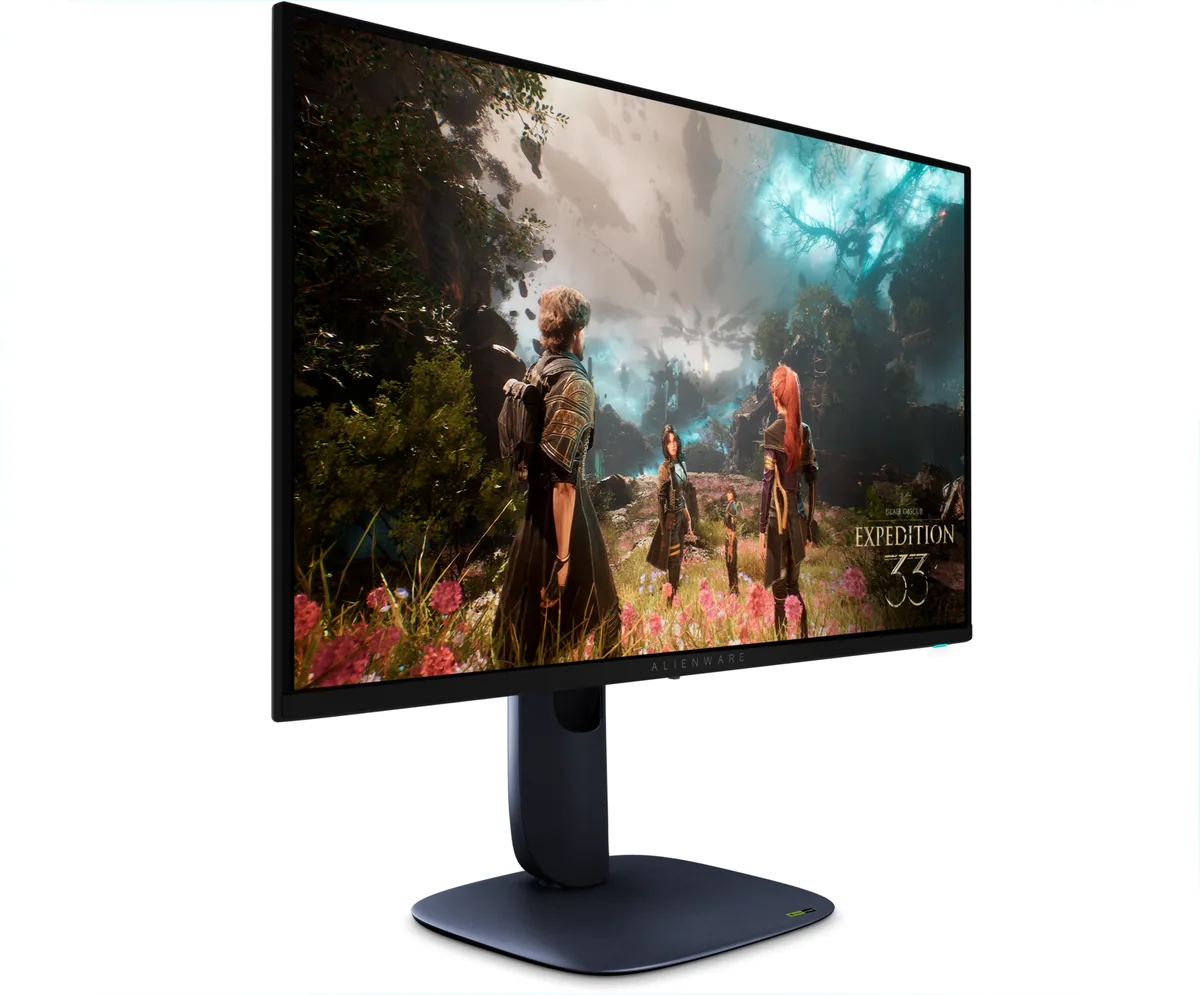
Alienware
Alienware AW2725Q
69ppd · retina-classReal HDR~$900
Fourth-generation QD-OLED at 27 inches and 4K, which works out to 165 pixels per inch — the highest density on any OLED in this catalog and the panel that finally makes an OLED reasonable to write code on.
Best for: An OLED that has to handle text as well as it handles motion
- 2×HDMI 2.1· full speed(DSC)
- DisplayPort 1.4· full speed(DSC)
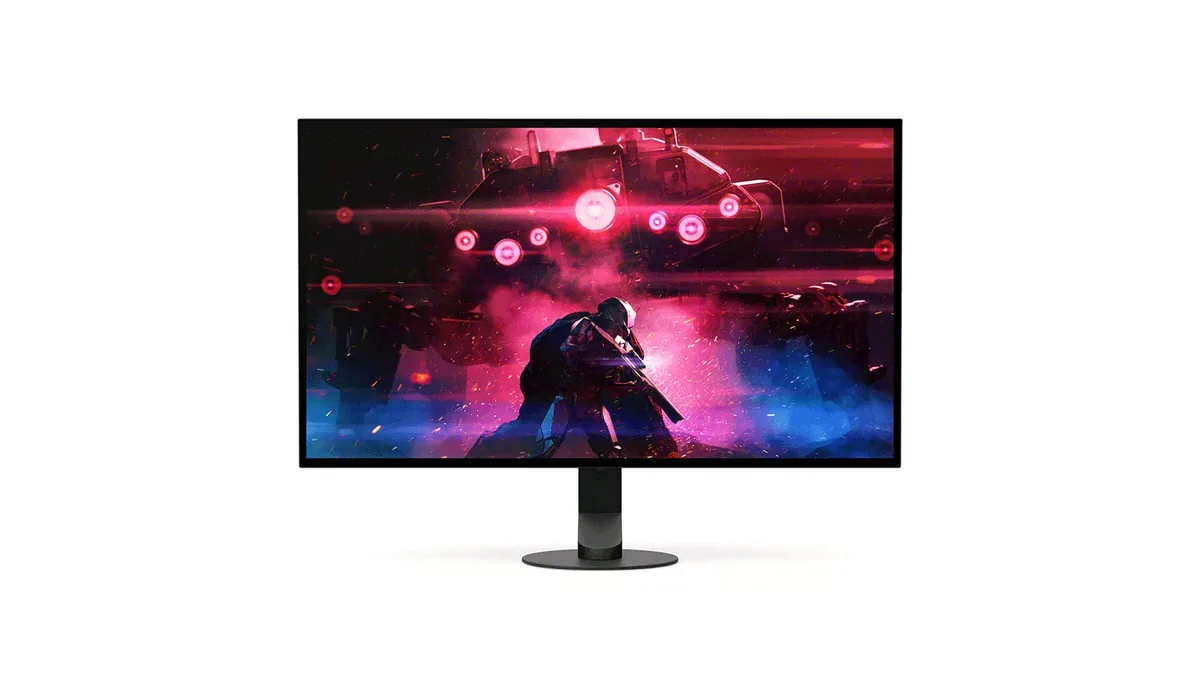
Sony
Sony INZONE M10S
46ppd · sharpReal HDR~$900
Developed with an esports team, and the design decisions show it: a stand whose base is 4 mm thick and 159 mm across so a keyboard can slide over it, a Tournament Mode that strips the picture back, and a switch that shrinks the image to a 24.5-inch window for players who train on that size.
Best for: Competitive play where frame rate outranks everything else
- 2×HDMI 2.1· full speed(DSC)
- DisplayPort 2.1 UHBR10· full speed(DSC)
| Specification | Alienware AW2725Q | Sony INZONE M10S |
|---|---|---|
| Approx. price | ~$900 | ~$900 |
| Type | OLED gaming | OLED gaming |
| Screen size | 26.7 in | 26.5 in |
| Resolution | 3840×2160 | 2560×1440 |
| Aspect ratio | 16:9 | 16:9 |
| Pixels per degree | 69 — retina-class | 46 — sharp |
| Pixels per inch | 165 | 111 |
| Panel | QD-OLED | WOLED |
| Finish | semi-glossy | matte |
| Curvature | Flat | Flat |
| Max refresh | 240 Hz | 480 Hz |
| Response time | 0.03 ms GtG | 0.03 ms GtG |
| VRR | G-Sync Compatible | G-Sync Compatible |
| HDR tier | Real HDR | Real HDR |
| HDR certification | DisplayHDR True Black 400 | DisplayHDR True Black 400 |
| Peak brightness | 1,000 nits claimed | 1,300 nits claimed |
| SDR brightness | 250 nits | 275 nits |
| Local dimming | Per-pixel (emissive) | Per-pixel (emissive) |
| Static contrast | effectively infinite | effectively infinite |
| Colour gamut | 99% DCI-P3 | 98.5% DCI-P3 |
| Colour depth | 10-bit | — |
| HDMI | 2 × HDMI 2.1 | 2 × HDMI 2.1 |
| DisplayPort | 1 × DisplayPort 1.4 | 1 × DisplayPort 2.1 UHBR10 |
| DSC | Supported | Supported |
| Port speed | 2 of 2 inputs at full speed | 2 of 2 inputs at full speed |
| USB-C | None | None |
| Thunderbolt | No | No |
| KVM | None | None |
| USB hub | 4 ports | Present, port count not published |
| Speakers | None | None |
| Stand | height, tilt, swivel, pivot | height, tilt, swivel |
| VESA | 100x100 | 100x100 |
| Burn-in cover | 3 years | 3 years |
| Weight | 13.8 lb | 9.3 lb |
| Released | 2025 | 2024 |
| $ per inch | $34 | $34 |
| $ per megapixel | $109 | $244 |
Alienware AW2725Q: what it gives up
- 4K at 26.7 inches needs Windows scaling at 150%, and scaled text on an OLED subpixel grid is where fringing reappears
- Nine hundred dollars for a 27-inch monitor
- The only USB-C is downstream and the hub connects over USB-B, so there is no single-cable laptop setup
- 250 nits full-field in SDR behind a semi-glossy coating, which a bright room will fight
Sony INZONE M10S: what it gives up
- 1440p on a 26.5-inch panel is 46 pixels per degree — sharp, but a 4K panel the same size resolves noticeably more detail
- No speakers at all, only a headphone jack
- Full-screen white is rated at 275 nits, as on every OLED here, so the 1,300-nit peak applies to small highlights only
- Around $900 buys 1440p here, where the same money buys 4K on a backlit panel
- No USB-C and no KVM, so a laptop brings its own charger and swapping machines means swapping cables
Full specifications: Alienware AW2725Q · Sony INZONE M10S