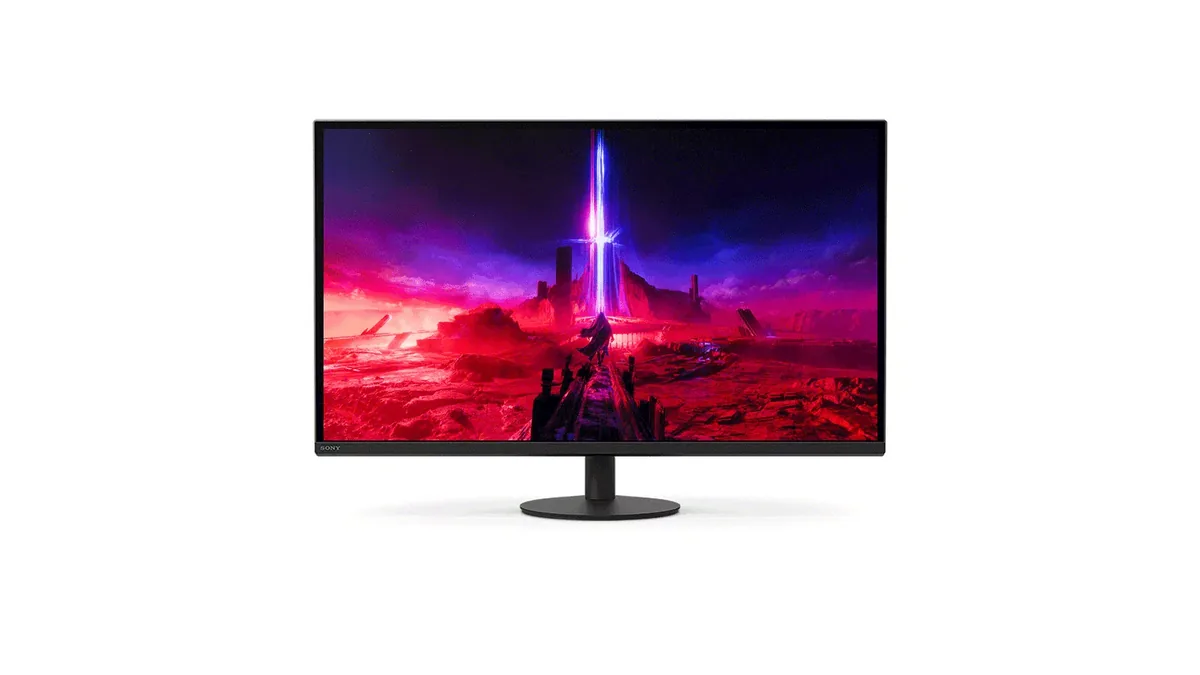
Sony INZONE M10S monitorOLED gaming~$900

Sony

Sony INZONE M10S

Developed with an esports team, and the design decisions show it: a stand whose base is 4 mm thick and 159 mm across so a keyboard can slide over it, a Tournament Mode that strips the picture back, and a switch that shrinks the image to a 24.5-inch window for players who train on that size. 480 Hz on a WOLED panel with 0.03 ms response sat at the top of the shipping refresh-rate range when it launched, and only the 500 Hz panels that followed have passed it. Unusually for an OLED, Sony specified a matte coating rather than the usual gloss, which trades a little colour punch for a screen that survives a lit room.

Approx. price

~$900

snapshot, not a live price

Sharpness

46ppd · sharp

text is clean; pixel edges show if you look for them

HDR tier

Real HDR

per-pixel emissive — every pixel is its own backlight, so a highlight can sit beside true black

Peak brightness

1,300nits claimed

DisplayHDR True Black 400

USB-C power

None

video and data only, or no USB-C at all

Max refresh

480 Hz

0.03 ms GtG rated

Port speed — can each input carry this panel?

  • 2×HDMI 2.1· full speed(DSC)
  • DisplayPort 2.1 UHBR10· full speed(DSC)

This panel needs 63.7 Gbps at 2560×1440, 480 Hz and 30 bits per pixel, and supports DSC compression.

Best for: Competitive play where frame rate outranks everything else

Specifications

Approx. price
~$900
Type
OLED gaming
Resolution
2560×1440
Pixels per degree
46 — sharp
Panel
WOLED
Finish
matte
Response time
0.03 ms GtG
VRR
G-Sync Compatible
HDR tier
Real HDR
HDR certification
DisplayHDR True Black 400
Peak brightness
1,300 nits claimed
Local dimming
Per-pixel (emissive)
Static contrast
effectively infinite
Colour gamut
98.5% DCI-P3
HDMI
2 × HDMI 2.1
DisplayPort
1 × DisplayPort 2.1 UHBR10
DSC
Supported
Port speed
2 of 2 inputs at full speed
USB-C
None
KVM
None
USB hub
Present, port count not published
Speakers
None
Stand
height, tilt, swivel
VESA
100x100
Weight
9.3 lb
Released
2024
$ per inch
$34
$ per megapixel
$244

Features

  • 480 Hz WOLED with 0.03 ms grey-to-grey
  • 24.5-inch display mode for players used to that size
  • Matte anti-glare coating on a WOLED panel
  • Custom heatsink for sustained brightness
  • Three-year warranty that covers burn-in
  • DisplayPort 2.1 and two HDMI 2.1 inputs

What it does well

  • 480 Hz with per-pixel response, and the step up from 240 Hz is visible in how cleanly a moving target stays resolved
  • A matte coating on an OLED is rare, and it is the difference between usable and unusable next to a window
  • The 24.5-inch mode lets a player keep the exact field of view they have trained on for years
  • Three years of warranty explicitly covering burn-in, matching the longest cover any OLED here carries
  • The near-flat stand base gives a keyboard its space back, and the display still raises, tilts and swivels

What it gives up

  • 1440p on a 26.5-inch panel is 46 pixels per degree — sharp, but a 4K panel the same size resolves noticeably more detail
  • No speakers at all, only a headphone jack
  • Full-screen white is rated at 275 nits, as on every OLED here, so the 1,300-nit peak applies to small highlights only
  • Around $900 buys 1440p here, where the same money buys 4K on a backlit panel
  • No USB-C and no KVM, so a laptop brings its own charger and swapping machines means swapping cables

The two lists above come from the maker’s specifications and from published third-party measurements, not from owner reports. Where owner discussion has been read it appears in its own section below, so the two are never mistaken for each other.

What owners say

Competitive players are the constituency here, and the discussion reads that way. Owners arriving from 240 Hz and 360 Hz panels describe the step to 480 Hz as noticeable rather than transformative — the clearest account came from someone who also owns a 360 Hz IPS and a 4K 240 Hz OLED, and who framed the gain as extra time to react to an enemy rather than a visible smoothness change. One open-box buyer coming from a 280 Hz IPS with 5,000 hours of Rocket League found the difference small enough to consider returning it. The stand, though, is nearly universally praised: a small base thin enough to slide a keyboard across, 180 degrees of swivel, and a design with no RGB anywhere on it.

HDR is where this monitor earns its worst reputation, and the evidence is unusually direct. Owners report peak brightness sitting around 445 nits in every HDR mode against a 1,300-nit specification, with raised gamma making dark scenes look washed out; one went as far as trying to rewrite the display's HDR metadata to force the advertised figure. Most damning is an owner who bought both this and the ASUS monitor built on the same panel, ran them side by side on matched settings, and found the ASUS produced brighter, more saturated, better-detailed highlights and deeper blacks. The absence of black frame insertion is the other gap competitive buyers weigh, and asking Sony for it by firmware has not produced it.

Reliability reports are worth reading before buying. Vertical lines and half-screen pixelation after four months, a black screen at anything above 240 Hz, dark streaks visible on grey backgrounds, and a static white bar over DisplayPort that vanishes on HDMI all appear in owner accounts, and at least two people hit warranty expiry before the fault did. Setup quirks pile on: the bundled DisplayPort cable caused signal dropouts for one owner who switched to HDMI and lost variable refresh rate entirely, 480 Hz cannot be selected at custom or lower resolutions, and microstutter needed a third-party utility to strip surplus resolution modes. Buyers should also note that early units shipped with one year of cover, a frequent complaint before Sony extended OLED warranty on these monitors to three years.
What owners like

  • The stand is the runaway favourite detail. Owners describe a genuinely small footprint on a crowded desk, a base thin enough to slide a keyboard over, and 180 degrees of swivel — one buyer comparing it directly against the ASUS monitor on the same panel called Sony's stand 'much much much better'
  • SDR brightness surprises people. An owner who also runs two other high-end ASUS panels said this one gets 'stupid bright' in SDR, which is not what buyers expect from a WOLED
  • Input lag is exceptional by published measurement: competitive players comparing latency tables found it sitting level with the fastest TN esports panels, which is unusual for an OLED
  • The matte coating divides opinion but wins converts — owners with a window in the room name it as the reason they picked this over a glossy panel, and several expecting to dislike it reported the finish looked fine to them
  • Understated design with no RGB and a slim bezel comes up repeatedly as a deliberate reason to choose it over the gamer-styled alternatives
  • In the US it frequently undercut the same-panel ASUS by $100 to $300, and open-box units at Best Buy show up in owner posts regularly
  • The 24.5-inch mode is the feature competitive players single it out for — there is little else on the market that shrinks a 27-inch panel to the size they trained on

Common complaints

  • HDR is the dominant complaint and it is specific: owners report peak brightness pinned near 445 nits across every HDR picture mode despite the 1,300-nit claim, with one trying to edit the display's EDID to force the advertised figure and failing
  • Gamma and black level are raised in HDR badly enough that owners describe the image as washed out; one who owned this and the ASUS model on the identical panel at the same time found highlights rendered as flat white blotches here where the ASUS resolved detail
  • No black frame insertion. Owners weighing it against the ASUS alternative list that monitor's backlight-strobing mode as the one real feature gap, and several have asked whether Sony might add it by firmware — it has not arrived
  • VRR flicker is reported as immediately obvious the moment adaptive sync is switched on, and a firmware update did not resolve it for the owner who tried
  • Burn-in protection routines are hard-locked on by default with no way to disable them, which owners comparing it against rivals note as less control than they are used to
  • A visible cluster of unit-level failures turns up in owner posts: vertical lines and half-screen glitching after roughly four months, dark streaks on grey backgrounds, dots along the bottom edge, a black screen whenever the refresh rate is set above 240 Hz, and a static white bar at the top over DisplayPort that disappears over HDMI

Questions owners ask about the Sony INZONE M10S

Why does HDR peak at around 445 nits when the specification says 1,300?

Owners hit this consistently and nobody has found a fix. Reports describe the ceiling staying near 445 nits across cinema, display and game HDR modes, with the Windows calibration app behaving oddly — one owner's test pattern stopped clipping at 2,600 nits rather than 1,300. Another tried rewriting the display's HDR metadata with a third-party EDID tool and got nowhere. If HDR is a priority, owners who ran this alongside the ASUS monitor on the same panel were blunt about which one to buy.

Does it have black frame insertion or a strobing mode?

No, and this is the feature gap competitive buyers weigh hardest against the ASUS alternative, which does. Owners have asked whether Sony is likely to add it in a firmware update; several bought the Sony anyway for the stand, the design and the price, accepting they were giving up strobing to get them.

Is 480 Hz actually noticeable coming from 240 or 360 Hz?

Owners who have run all three describe it as noticeable rather than substantial. The most useful account came from someone who also owns a 360 Hz panel: the difference they could reliably feel was having marginally more time to react in a fight, not a change in how smooth motion looked. One owner moving from a 280 Hz IPS with thousands of hours in one game reported no meaningful difference at all and considered returning it.

Does VRR flicker on this monitor?

Owners say yes, and that it is obvious the moment adaptive sync is enabled. One updated to the newest firmware and found it unchanged, and now games with VRR off by default. This is common across OLED panels rather than unique to this model, but it is reported here often enough that anyone who plays with wildly variable frame rates should expect it.

Is the DisplayPort 2.1 port fast enough for 1440p at 480 Hz in 10-bit?

It is the lowest UHBR10 tier, around 40 Gbps, so compression carries the difference — and that is a live source of confusion among owners, several of whom have posted asking whether they are really getting 480 Hz. The practical answer from owners is that it works, including from graphics cards whose own outputs are DisplayPort 1.4, because DSC is doing the work. What owners do report hitting is a black screen when they try 360 Hz or 480 Hz on some units, and an inability to select 480 Hz at non-native resolutions.

What is the stand like on a small desk?

It is the most-praised part of the monitor. The base is unusually thin and shallow, so a keyboard can sit partly over it, and owners coming from wide tripod-style stands describe reclaiming real desk area. It swivels 180 degrees each way. The one consistent criticism is that the height range could be longer than it is.

Others in the same part of the catalog

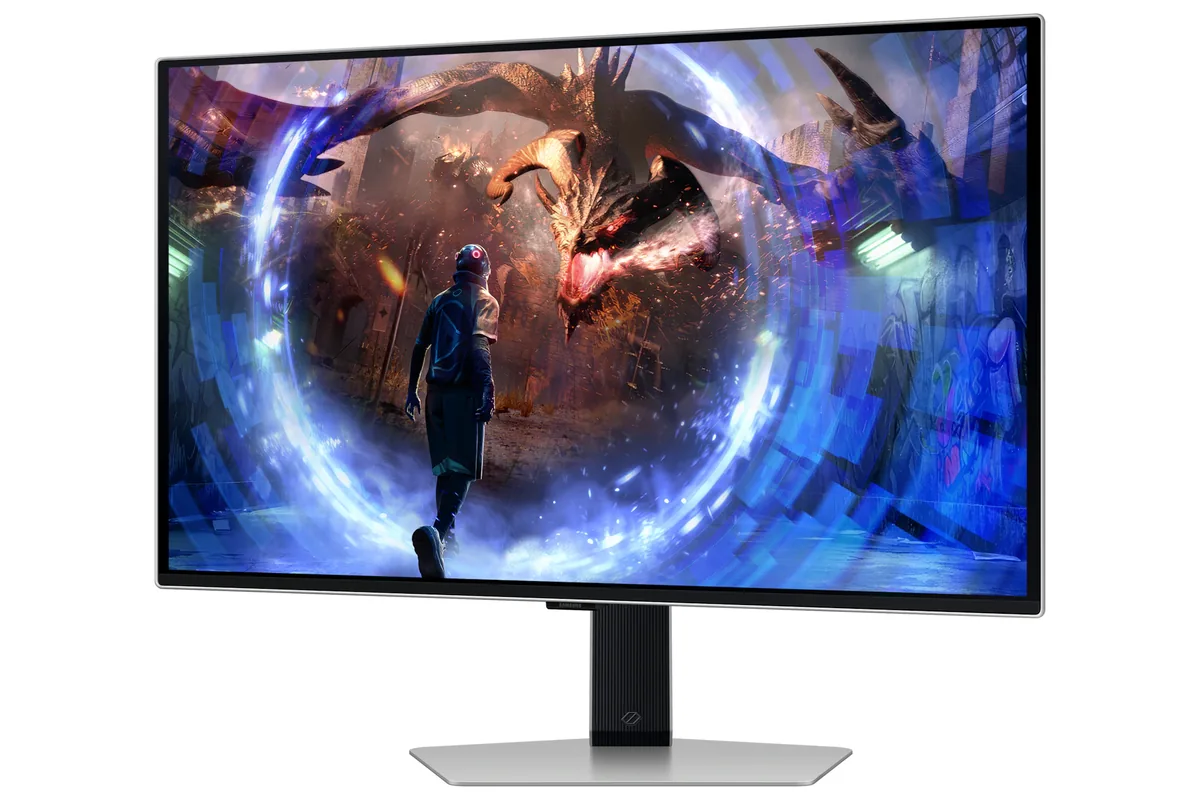
Samsung Odyssey OLED G6 G60SD monitor
Samsung~$900

Samsung Odyssey OLED G6 G60SD

27″ · 2560×1440 · 360 Hz · QD-OLED

No longer listed by Samsung
Sharpness
46ppd · sharp
HDR
Real HDR
USB-C power
No USB-C power
  • 360 Hz
  • Matte QD-OLED
  • Burn-in covered
  • Console at full speed

Best for: A room with windows that would defeat a glossy OLED

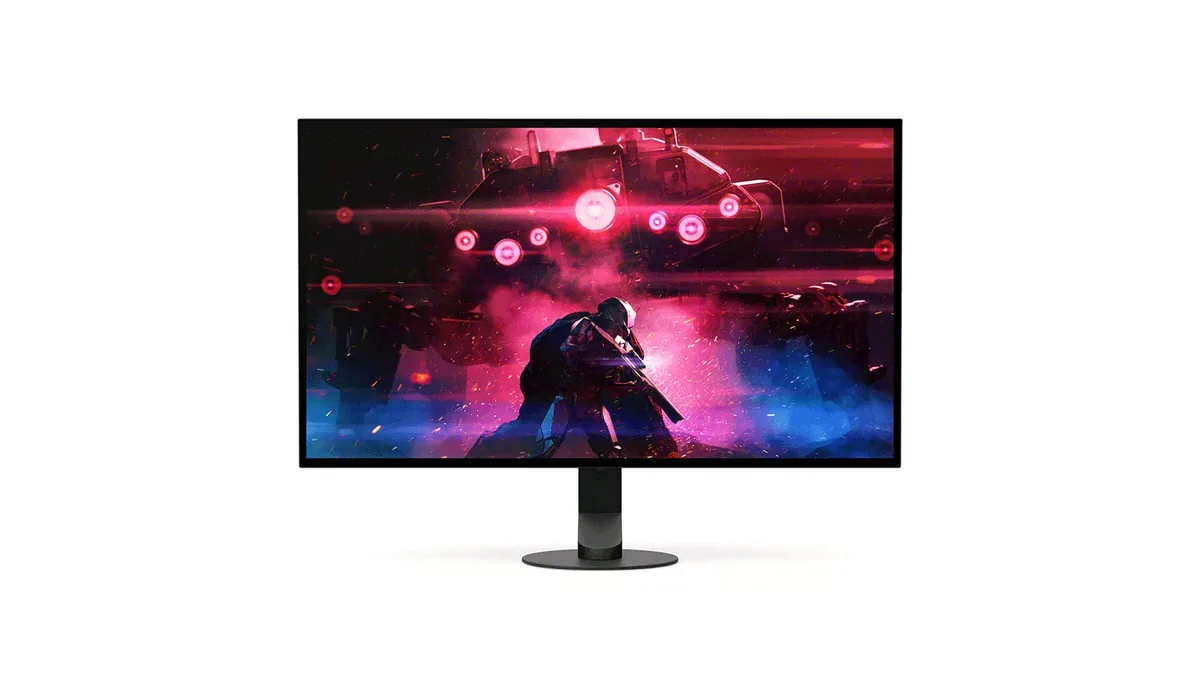
Sony INZONE M9 II monitor
Sony~$800

Sony INZONE M9 II

26.9″ · 3840×2160 · 160 Hz · IPS

Sharpness
69ppd · retina-class
HDR
Real HDR
USB-C power
No USB-C power
  • Full-array dimming
  • 4K at 160 Hz
  • Two HDMI 2.1
  • Console at full speed

Best for: Sharing one 4K screen between a console and a gaming PC

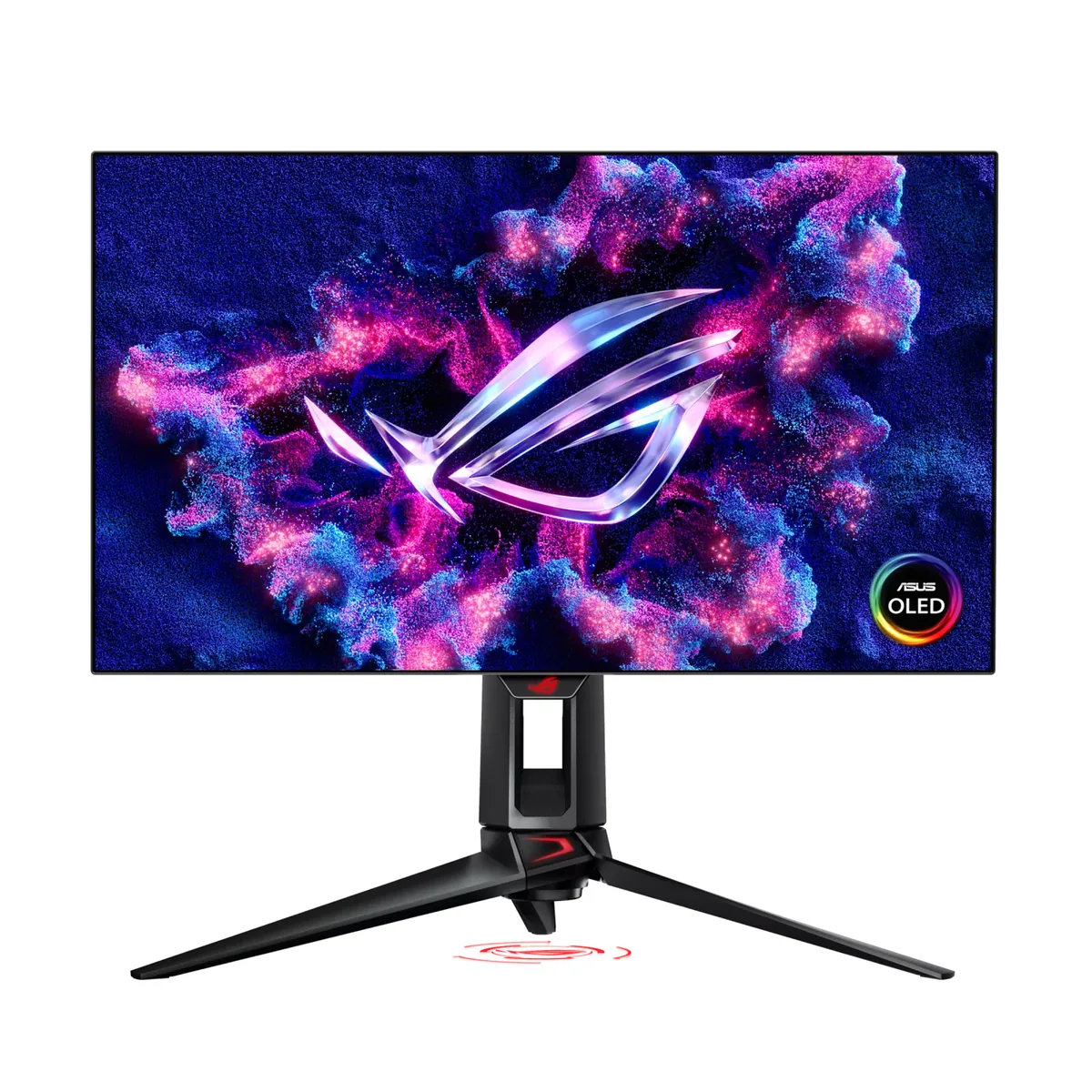
ASUS ROG Swift OLED PG27AQDP monitor
ASUS~$999

ASUS ROG Swift OLED PG27AQDP

26.5″ · 2560×1440 · 480 Hz · WOLED

Sharpness
46ppd · sharp
HDR
Real HDR
USB-C power
No USB-C power
  • 480 Hz
  • WOLED
  • 3-year burn-in cover
  • Console at full speed

Best for: Competitive shooters where frame timing is the only spec that counts

More from Sony →

← Back to the catalog