BenQ MOBIUZ EX3210U vs Sony INZONE M9 II
The Sony INZONE M9 II is 10 pixels per degree sharper at a desk distance — 69 against 59, and that is the line between sharp and retina-class. Every other published specification for both is in the table, with the rows where they differ tinted.
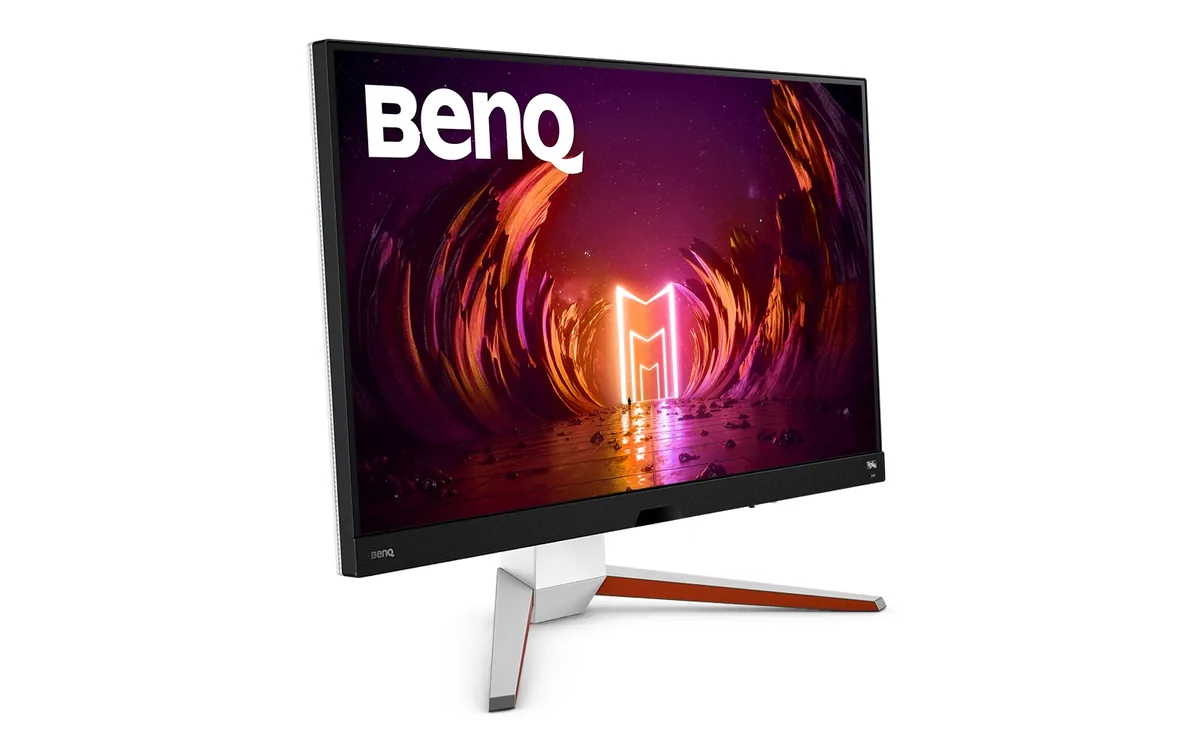
BenQ
BenQ MOBIUZ EX3210U
59ppd · sharpReal HDR~$700
Sixteen dimming zones is not many, and BenQ never pretended otherwise — what they buy is enough highlight headroom to clear DisplayHDR 600 on a 4K 144 Hz panel that covers 98% of Display P3.
Best for: A living-room-style desk running a PC and two consoles off one screen
- 2×HDMI 2.1· full speed(DSC)
- DisplayPort 1.4· full speed(DSC)
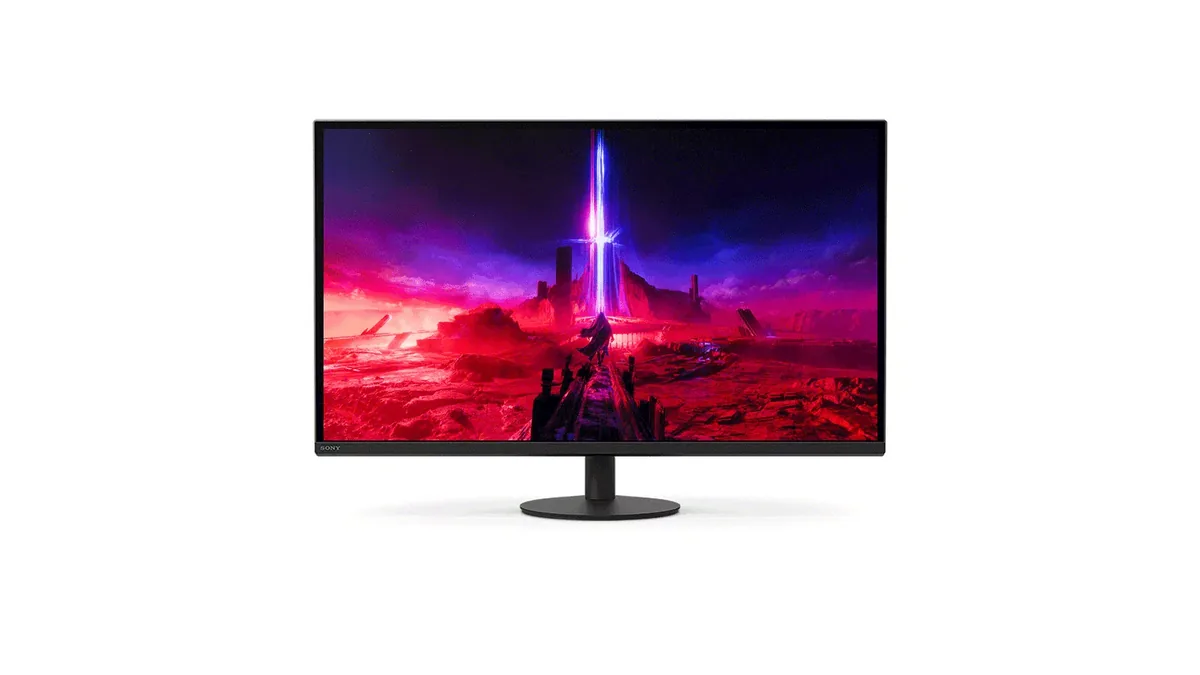
Sony
Sony INZONE M9 II
69ppd · retina-classReal HDR~$800
Sony built this one around the PlayStation as much as the PC: both HDMI ports are 2.1, the monitor recognises a PS5 and switches picture modes with it, and the case is styled to sit beside one.
Best for: Sharing one 4K screen between a console and a gaming PC
- 2×HDMI 2.1· full speed(DSC)
- DisplayPort 2.1 UHBR10· full speed(DSC)
| Specification | BenQ MOBIUZ EX3210U | Sony INZONE M9 II |
|---|---|---|
| Approx. price | ~$700 | ~$800 |
| Type | Gaming | Gaming |
| Screen size | 31.5 in | 26.9 in |
| Resolution | 3840×2160 | 3840×2160 |
| Aspect ratio | 16:9 | 16:9 |
| Pixels per degree | 59 — sharp | 69 — retina-class |
| Pixels per inch | 140 | 164 |
| Panel | IPS | IPS |
| Finish | matte | matte |
| Curvature | Flat | Flat |
| Max refresh | 144 Hz | 160 Hz |
| Response time | 2 ms GtG | 1 ms GtG |
| VRR | FreeSync Premium Pro | G-Sync Compatible |
| HDR tier | Real HDR | Real HDR |
| HDR certification | DisplayHDR 600 | DisplayHDR 600 |
| Peak brightness | 600 nits claimed | 750 nits claimed |
| SDR brightness | 300 nits | 400 nits |
| Local dimming | 16 zones | Local dimming, zone count not published |
| Static contrast | 1,000:1 | 1,000:1 |
| Colour gamut | 98% DCI-P3 | 95% DCI-P3 |
| Colour depth | 8-bit+FRC | 10-bit |
| HDMI | 2 × HDMI 2.1 | 2 × HDMI 2.1 |
| DisplayPort | 1 × DisplayPort 1.4 | 1 × DisplayPort 2.1 UHBR10 |
| DSC | Supported | Supported |
| Port speed | 2 of 2 inputs at full speed | 2 of 2 inputs at full speed |
| USB-C | None | None |
| Thunderbolt | No | No |
| KVM | None | None |
| USB hub | 4 ports | 2 ports |
| Speakers | Built in | None |
| Stand | height, tilt, swivel | height, tilt, swivel |
| VESA | 100x100 | 100x100 |
| Weight | 20.9 lb | — |
| Released | 2022 | 2024 |
| $ per inch | $22 | $30 |
| $ per megapixel | $84 | $96 |
BenQ MOBIUZ EX3210U: what it gives up
- Sixteen dimming zones across 8.3 million pixels means visible haloing around bright objects on dark backgrounds
- 1000:1 native contrast is ordinary IPS, so black is dark grey whenever local dimming cannot help
- No USB-C input at all, which by now is unusual on a monitor this expensive
- 144 Hz is the low end for a 2022 flagship — 4K panels now reach 240 Hz
- No KVM to go with the four-port hub, so the peripherals stay tied to whichever PC holds the USB-B cable
Sony INZONE M9 II: what it gives up
- 1,000:1 static contrast means the dimming zones are doing all the work; on mixed content you can see them
- No USB-C, so a laptop needs its own charger and an HDMI or DisplayPort cable
- No KVM, despite being explicitly sold as a two-machine monitor
- 160 Hz is well short of what the 1440p OLEDs at this price now run
Full specifications: BenQ MOBIUZ EX3210U · Sony INZONE M9 II