Dell UltraSharp U2725QE vs Apple Studio Display
The Apple Studio Display is 23 pixels per degree sharper at a desk distance — 91 against 68, and both sit in the retina-class band. Every other published specification for both is in the table, with the rows where they differ tinted.
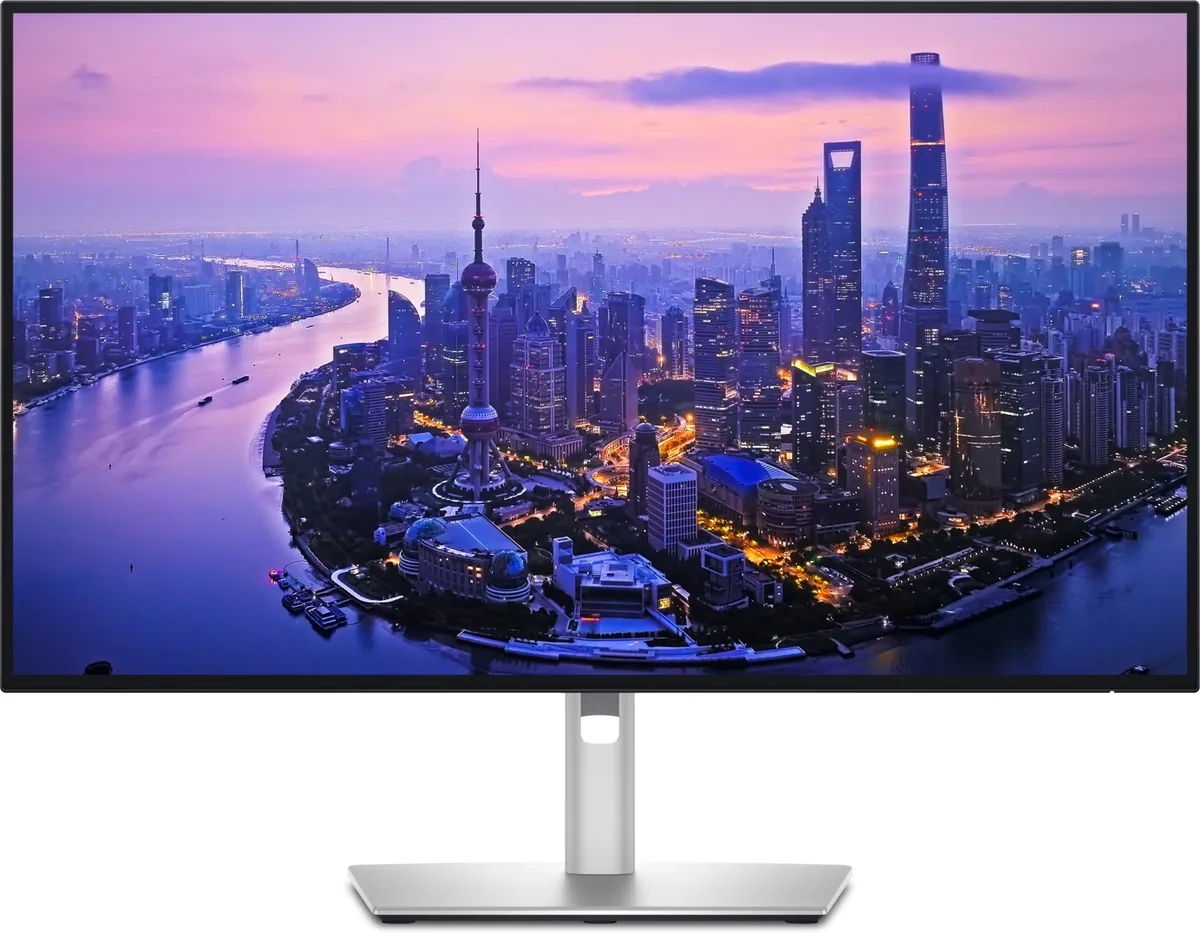
Dell
Dell UltraSharp U2725QE
68ppd · retina-classAccepts an HDR signal~$850
Dell's IPS Black panel technology exists to fix the one thing IPS has always been bad at, and it works: 3000:1 static contrast is triple a normal IPS panel and puts it within sight of VA without giving up the viewing angles.
Best for: A two-machine desk that should run from one cable and one keyboard
- HDMI 2.1· full speed
- DisplayPort 1.4· full speed(DSC)
- Thunderbolt (DP 1.4)· full speed(DSC)
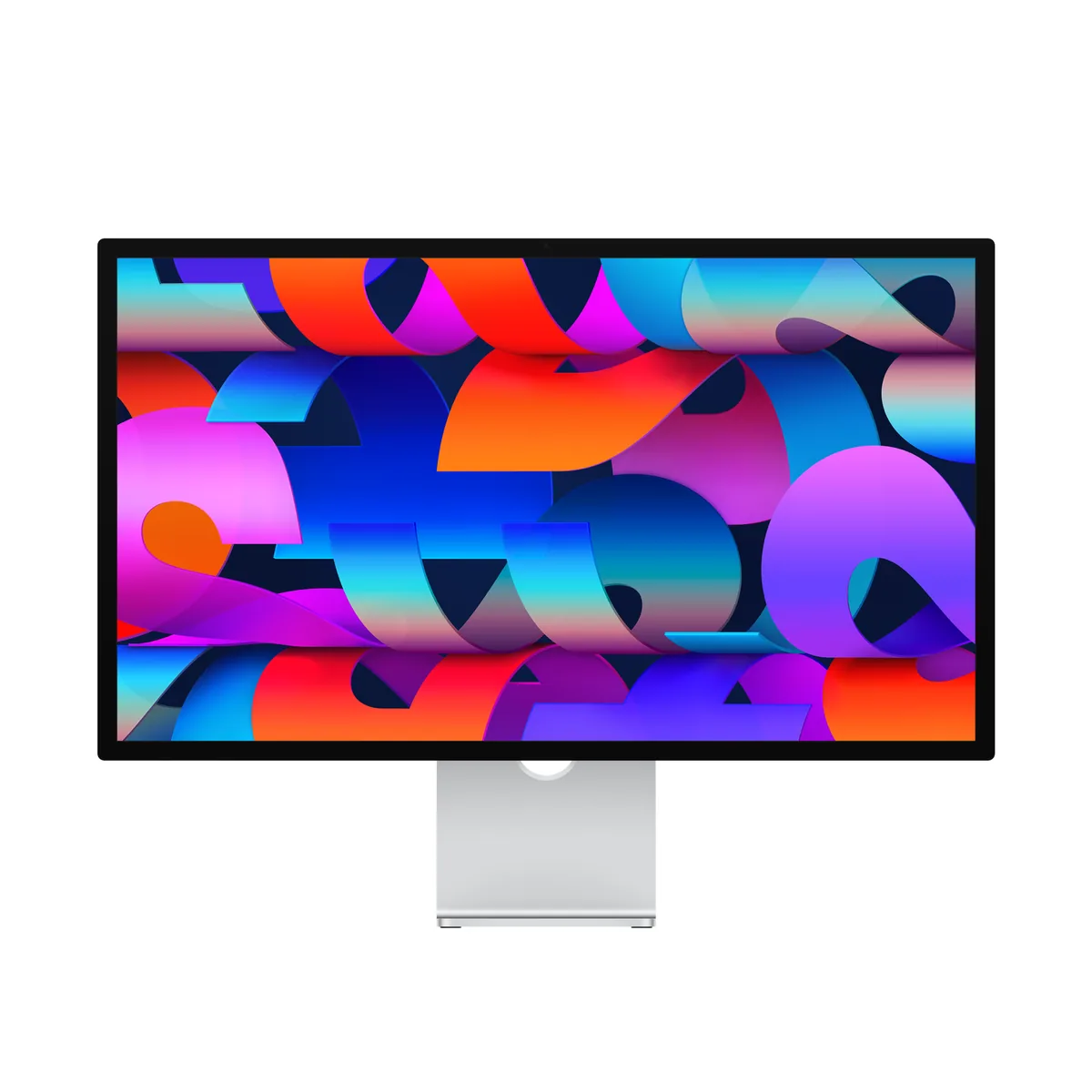
Apple
Apple Studio Display
91ppd · retina-classNo HDR~$1,599
Apple sells this as a Mac accessory as much as a monitor, and the spec sheet follows: 218 pixels per inch, 600 nits, 60 Hz, and no video input that is not Thunderbolt.
Best for: A Mac desk where text sharpness and a clean cable matter more than refresh rate
- Thunderbolt (DP 1.4)· full speed(DSC)
| Specification | Dell UltraSharp U2725QE | Apple Studio Display |
|---|---|---|
| Approx. price | ~$850 | ~$1,599 |
| Type | Productivity | 4K/5K creator |
| Screen size | 27 in | 27 in |
| Resolution | 3840×2160 | 5120×2880 |
| Aspect ratio | 16:9 | 16:9 |
| Pixels per degree | 68 — retina-class | 91 — retina-class |
| Pixels per inch | 163 | 218 |
| Panel | IPS | IPS |
| Finish | matte | glossy |
| Curvature | Flat | Flat |
| Max refresh | 120 Hz | 60 Hz |
| Response time | 5 ms GtG | — |
| VRR | Adaptive-Sync | None |
| HDR tier | Accepts an HDR signal | No HDR |
| HDR certification | DisplayHDR 600 | None |
| Peak brightness | 600 nits claimed | 600 nits claimed |
| SDR brightness | 450 nits | 600 nits |
| Local dimming | — | None |
| Static contrast | 3,000:1 | — |
| Colour gamut | 99% DCI-P3 | — |
| Colour depth | 10-bit | 10-bit |
| HDMI | 1 × HDMI 2.1 | None |
| DisplayPort | 1 × DisplayPort 1.4 | None |
| DSC | Supported | Supported |
| Port speed | 3 of 3 inputs at full speed | 1 of 1 input at full speed |
| USB-C | Video in over USB-C | Video in over USB-C |
| USB-C power | 140 W — 16-inch workstation | 96 W — 14-inch class laptop |
| Thunderbolt | Yes | Yes |
| KVM | Built in | None |
| USB hub | 7 ports | 3 ports |
| Speakers | None | Built in |
| Stand | height, tilt, swivel, pivot | tilt |
| VESA | 100x100 | 100x100 |
| Weight | 15.56 lb | 13.9 lb |
| Released | — | 2026 |
| $ per inch | $31 | $59 |
| $ per megapixel | $102 | $108 |
Dell UltraSharp U2725QE: what it gives up
- Dell describes an LED Edgelight System and publishes no dimming-zone count behind the DisplayHDR 600 badge, so HDR content gets brighter without any promise of more contrast
- 5 ms response, and the adaptive-sync range only runs to 120 Hz — this is not a gaming monitor
- No speakers, which is an odd omission on a monitor built around docking a laptop
- The Thunderbolt hub adds meaningfully to the price over the plain USB-C versions of the same panel
Apple Studio Display: what it gives up
- $1,599 buys the tilt-only stand; height adjustment is a $400 option and the VESA version is a separate configuration
- No HDR at all — 600 nits from an edge-lit backlight with no dimming zones and no HDR certification
- 60 Hz, no adaptive sync, and Apple publishes no grey-to-grey or contrast figure
- No HDMI and no DisplayPort, so a console or an older PC has nothing to plug in
- Standard glass is genuinely glossy; the nano-texture option costs $300 more
Full specifications: Dell UltraSharp U2725QE · Apple Studio Display