Gigabyte AORUS FO32U2P vs Gigabyte AORUS FO27Q3
The Gigabyte AORUS FO32U2P is 13 pixels per degree sharper at a desk distance — 59 against 46, and both sit in the sharp band. Every other published specification for both is in the table, with the rows where they differ tinted.
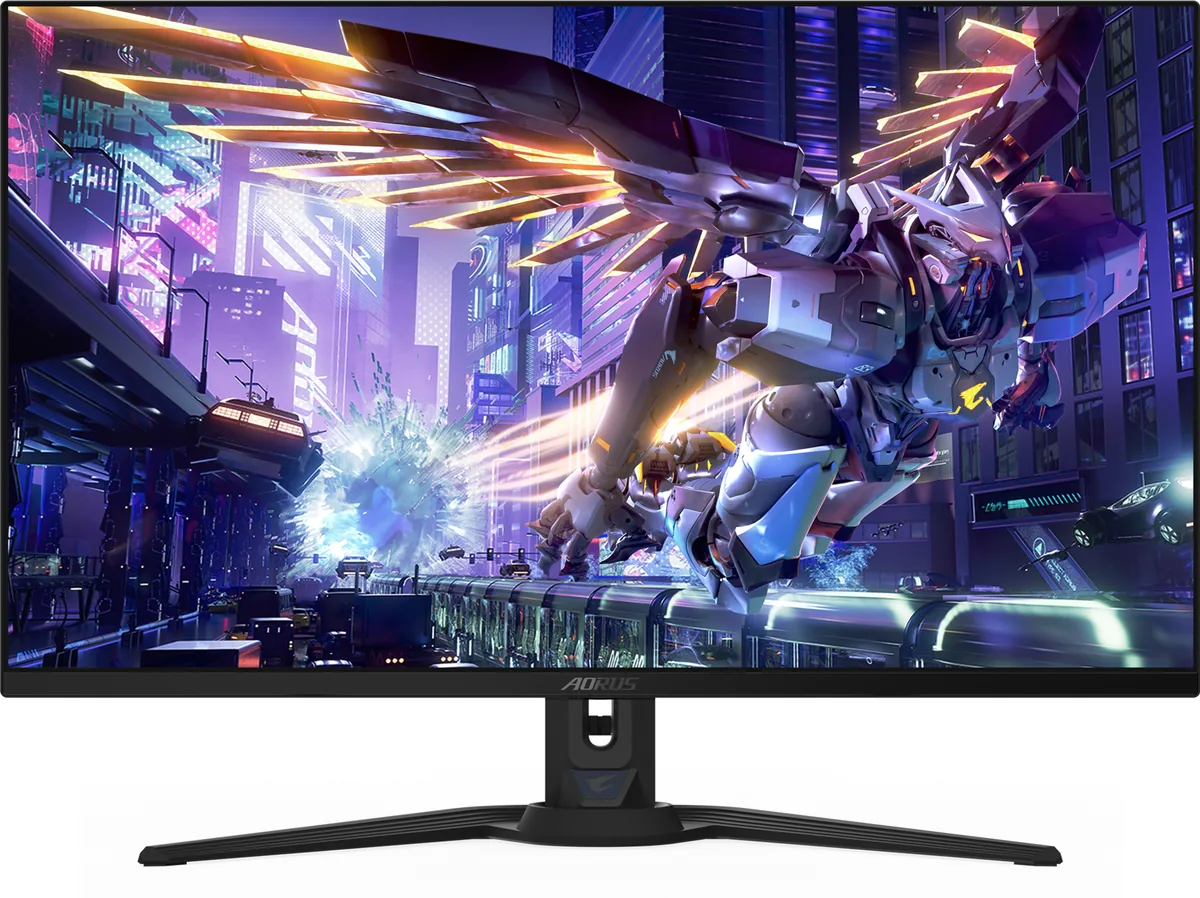
Gigabyte
Gigabyte AORUS FO32U2P
59ppd · sharpReal HDR~$1,199
The only 32-inch 4K OLED here with DisplayPort 2.1 at the full UHBR20 rate, which carries 4K at 240 Hz in 10-bit without compression — every rival does the same job through DSC.
Best for: A 4K OLED driven uncompressed by a DisplayPort 2.1 graphics card
- 2×HDMI 2.1· full speed(DSC)
- 2×DisplayPort 2.1 UHBR20· full speed
- USB-C (DP Alt Mode)· full speed(DSC)
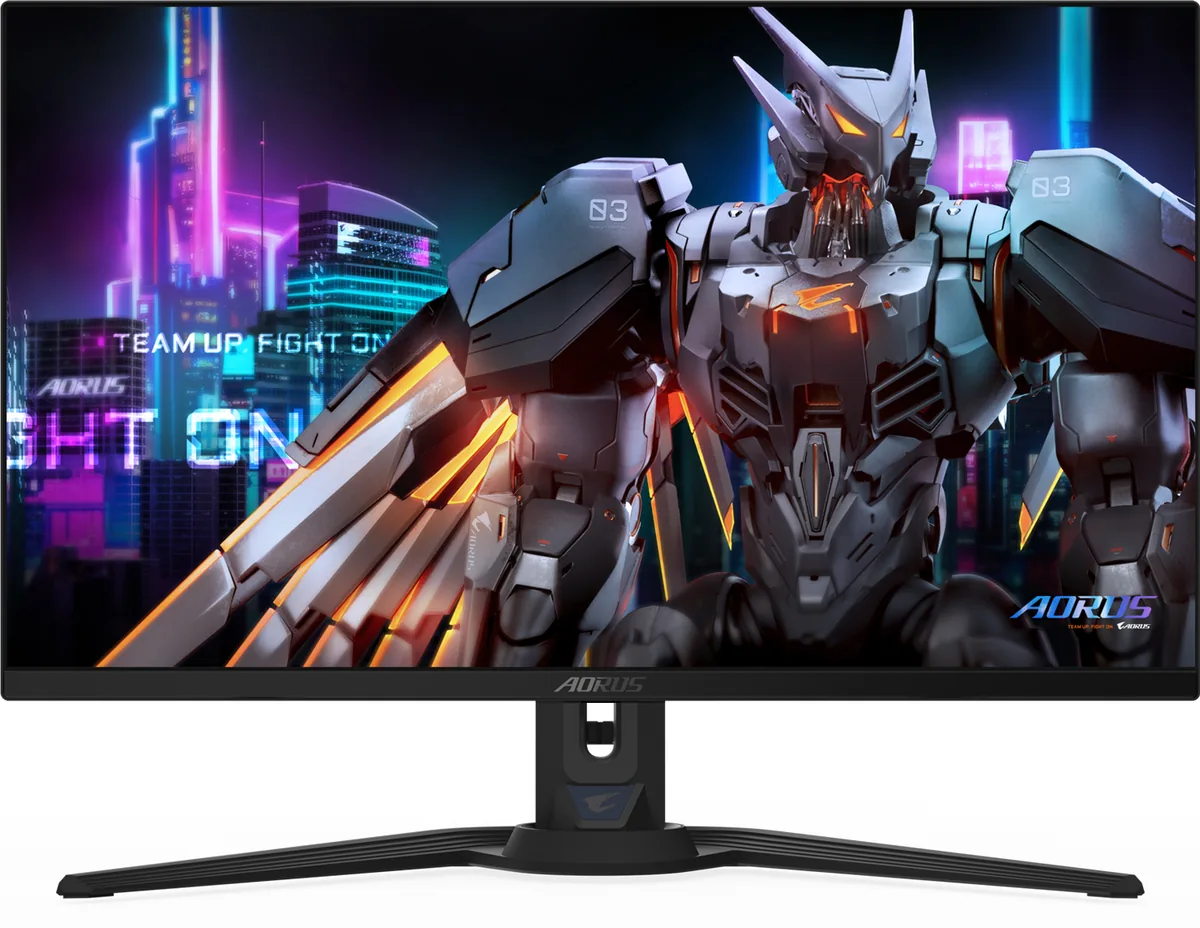
Gigabyte
Gigabyte AORUS FO27Q3
46ppd · sharpReal HDR~$800
Gigabyte's 27-inch QD-OLED does the same thing its LCD monitors do: fits a KVM to a panel whose direct rivals ship without one.
Best for: A fast OLED for a desk that switches between two machines
- 2×HDMI 2.1· full speed(DSC)
- DisplayPort 1.4· full speed(DSC)
- USB-C (DP Alt Mode)· full speed(DSC)
| Specification | Gigabyte AORUS FO32U2P | Gigabyte AORUS FO27Q3 |
|---|---|---|
| Approx. price | ~$1,199 | ~$800 |
| Type | OLED gaming | OLED gaming |
| Screen size | 31.5 in | 26.5 in |
| Resolution | 3840×2160 | 2560×1440 |
| Aspect ratio | 16:9 | 16:9 |
| Pixels per degree | 59 — sharp | 46 — sharp |
| Pixels per inch | 140 | 111 |
| Panel | QD-OLED | QD-OLED |
| Finish | semi-glossy | glossy |
| Curvature | Flat | Flat |
| Max refresh | 240 Hz | 360 Hz |
| Response time | 0.03 ms GtG | 0.03 ms GtG |
| VRR | FreeSync Premium Pro | FreeSync Premium Pro |
| HDR tier | Real HDR | Real HDR |
| HDR certification | DisplayHDR True Black 400 | DisplayHDR True Black 400 |
| Peak brightness | 1,000 nits claimed | 1,000 nits claimed |
| Measured peak | 1,072 nits · TFTCentral | — |
| SDR brightness | 250 nits | 250 nits |
| Local dimming | Per-pixel (emissive) | Per-pixel (emissive) |
| Static contrast | effectively infinite | effectively infinite |
| Colour gamut | 99% DCI-P3 | 99% DCI-P3 |
| Colour depth | 10-bit | 10-bit |
| HDMI | 2 × HDMI 2.1 | 2 × HDMI 2.1 |
| DisplayPort | 2 × DisplayPort 2.1 UHBR20 | 1 × DisplayPort 1.4 |
| DSC | Supported | Supported |
| Port speed | 3 of 3 inputs at full speed | 3 of 3 inputs at full speed |
| USB-C | Video in over USB-C | Video in over USB-C |
| USB-C power | 65 W — Thin-and-light laptop | 18 W — Phone and tablet |
| Thunderbolt | No | No |
| KVM | Built in | Built in |
| USB hub | 2 ports | 2 ports |
| Speakers | Built in | Built in |
| Stand | height, tilt, swivel, pivot | height, tilt, swivel, pivot |
| VESA | 100x100 | 100x100 |
| Burn-in cover | 3 years | 3 years |
| Weight | 18.8 lb | 15.9 lb |
| Released | 2024 | 2024 |
| $ per inch | $38 | $30 |
| $ per megapixel | $145 | $217 |
Gigabyte AORUS FO32U2P: what it gives up
- The DisplayPort 2.1 advantage only exists if the graphics card has a UHBR20 output, and most installed cards do not
- 250 nits of full-field SDR behind a semi-glossy coating, so a window behind you shows up in the picture
- 65 W over USB-C holds a thin-and-light but not a 16-inch workstation under load
- $1,199 is flagship pricing for a panel several rivals here sell for less
Gigabyte AORUS FO27Q3: what it gives up
- Glossy QD-OLED at 250 nits full-field wants a room with controlled light
- Text sits at ordinary 1440p density with QD-OLED subpixel fringing on top of it
- USB-C is 18 W, so it is a KVM uplink rather than a laptop dock
Full specifications: Gigabyte AORUS FO32U2P · Gigabyte AORUS FO27Q3