LG UltraGear 27GR93U vs LG UltraGear 32GR93U
The LG UltraGear 27GR93U is 9 pixels per degree sharper at a desk distance — 68 against 59, and that is the line between sharp and retina-class. Every other published specification for both is in the table, with the rows where they differ tinted.
LG
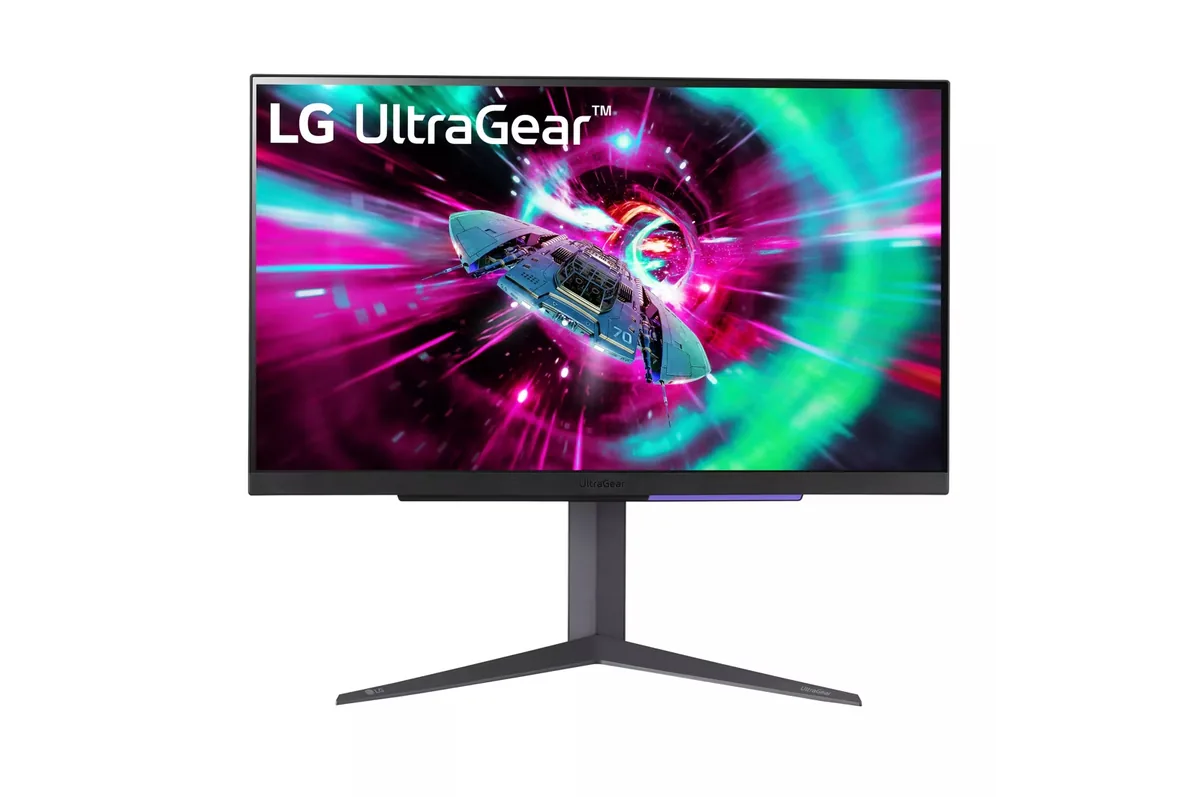
LG UltraGear 27GR93U
68ppd · retina-classAccepts an HDR signal~$500
Two HDMI 2.1 inputs are what separates this one from the rest of LG's 27-inch 4K line, and they are the reason it keeps turning up in console threads: a PS5 or a Series X drives it at 4K120 without compression or a fallback mode.
Best for: One desk shared by a PC and a current console, without a bandwidth compromise on either
- 2×HDMI 2.1· full speed(DSC)
- DisplayPort 1.4· full speed(DSC)
LG
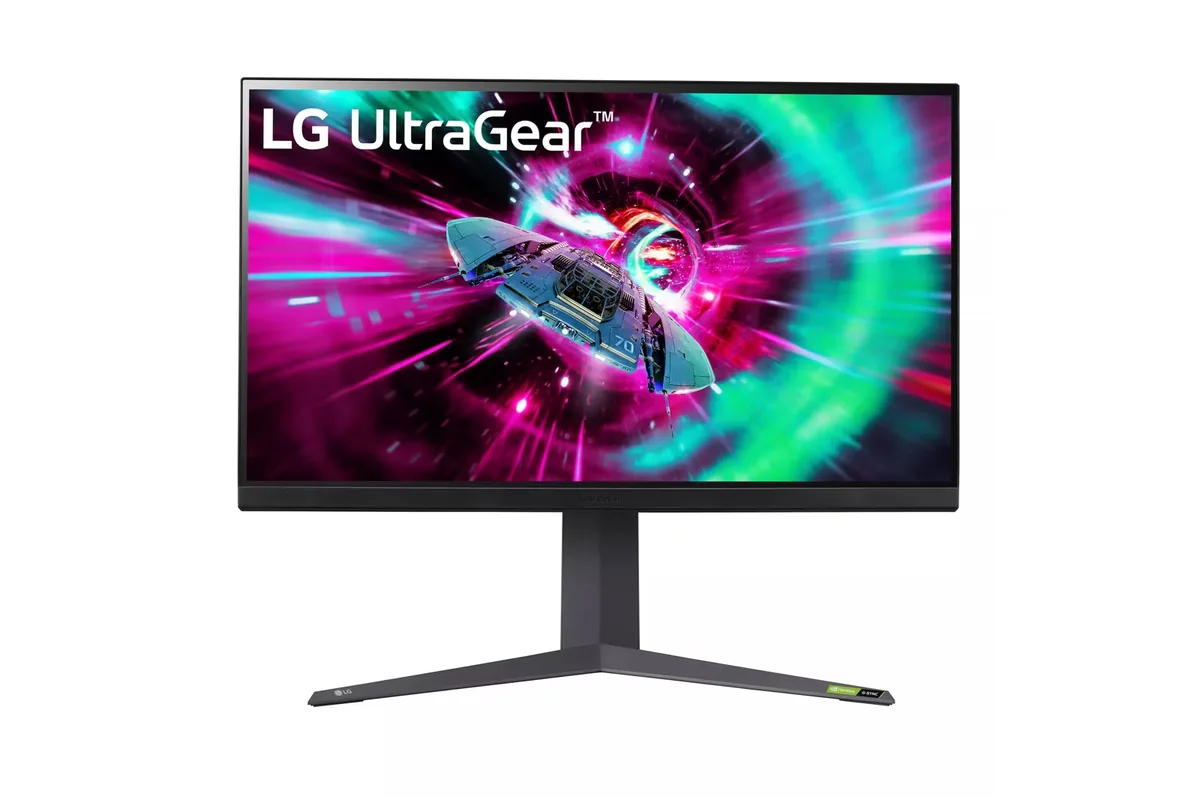
LG UltraGear 32GR93U
59ppd · sharpAccepts an HDR signal~$600
The 27GR93U's larger sibling, and the size where 4K stops being a luxury and starts being the only sensible resolution — 140 pixels per inch at 32 inches is what makes Windows usable at 100% scaling instead of 150%.
Best for: A big desktop where 4K at 100% scaling is the point
- 2×HDMI 2.1· full speed(DSC)
- DisplayPort 1.4· full speed(DSC)
| Specification | LG UltraGear 27GR93U | LG UltraGear 32GR93U |
|---|---|---|
| Approx. price | ~$500 | ~$600 |
| Type | Gaming | Gaming |
| Screen size | 27 in | 31.5 in |
| Resolution | 3840×2160 | 3840×2160 |
| Aspect ratio | 16:9 | 16:9 |
| Pixels per degree | 68 — retina-class | 59 — sharp |
| Pixels per inch | 163 | 140 |
| Panel | IPS | IPS |
| Finish | matte | matte |
| Curvature | Flat | Flat |
| Max refresh | 144 Hz | 144 Hz |
| Response time | 1 ms GtG | 1 ms GtG |
| VRR | G-Sync Compatible | G-Sync Compatible |
| HDR tier | Accepts an HDR signal | Accepts an HDR signal |
| HDR certification | DisplayHDR 400 | DisplayHDR 400 |
| Peak brightness | 500 nits claimed | 500 nits claimed |
| SDR brightness | 400 nits | 400 nits |
| Local dimming | None | — |
| Static contrast | 1,000:1 | 1,000:1 |
| Colour gamut | 95% DCI-P3 | 95% DCI-P3 |
| Colour depth | 8-bit+FRC | 8-bit+FRC |
| HDMI | 2 × HDMI 2.1 | 2 × HDMI 2.1 |
| DisplayPort | 1 × DisplayPort 1.4 | 1 × DisplayPort 1.4 |
| DSC | Supported | Supported |
| Port speed | 2 of 2 inputs at full speed | 2 of 2 inputs at full speed |
| USB-C | None | None |
| Thunderbolt | No | No |
| KVM | None | None |
| USB hub | 2 ports | 2 ports |
| Speakers | None | None |
| Stand | height, tilt, pivot | height, tilt, pivot |
| VESA | 100x100 | 100x100 |
| Weight | 14.1 lb | 18.3 lb |
| Released | 2023 | 2023 |
| $ per inch | $19 | $19 |
| $ per megapixel | $60 | $72 |
LG UltraGear 27GR93U: what it gives up
- DisplayHDR 400 with an edge-lit backlight and no dimming zones — the HDR mode makes the picture dimmer and flatter, not better
- 1000:1 static contrast means blacks are grey in a dark room, which is the whole reason people cross-shop this against an OLED
- IPS glow in the corners on dark content is the usual lottery and LG does not screen for it
- No USB-C, so a laptop needs a separate dock
- Speakers are absent entirely; the headphone jack is the only audio path
LG UltraGear 32GR93U: what it gives up
- Colour is 8-bit plus dithering rather than native 10-bit, so wide dark gradients band faintly
- No swivel on an 18-pound panel, so angling it towards a second chair means shifting the whole base
- DisplayHDR 400 over an edge-lit backlight — HDR content will look duller than SDR
- IPS glow is more visible at 32 inches simply because there is more corner to glow
Full specifications: LG UltraGear 27GR93U · LG UltraGear 32GR93U