Samsung Odyssey OLED G6 G60SD vs Samsung Odyssey OLED G8 G80SD
The Samsung Odyssey OLED G8 G80SD is 12 pixels per degree sharper at a desk distance — 58 against 46, and both sit in the sharp band. Every other published specification for both is in the table, with the rows where they differ tinted.
Samsung
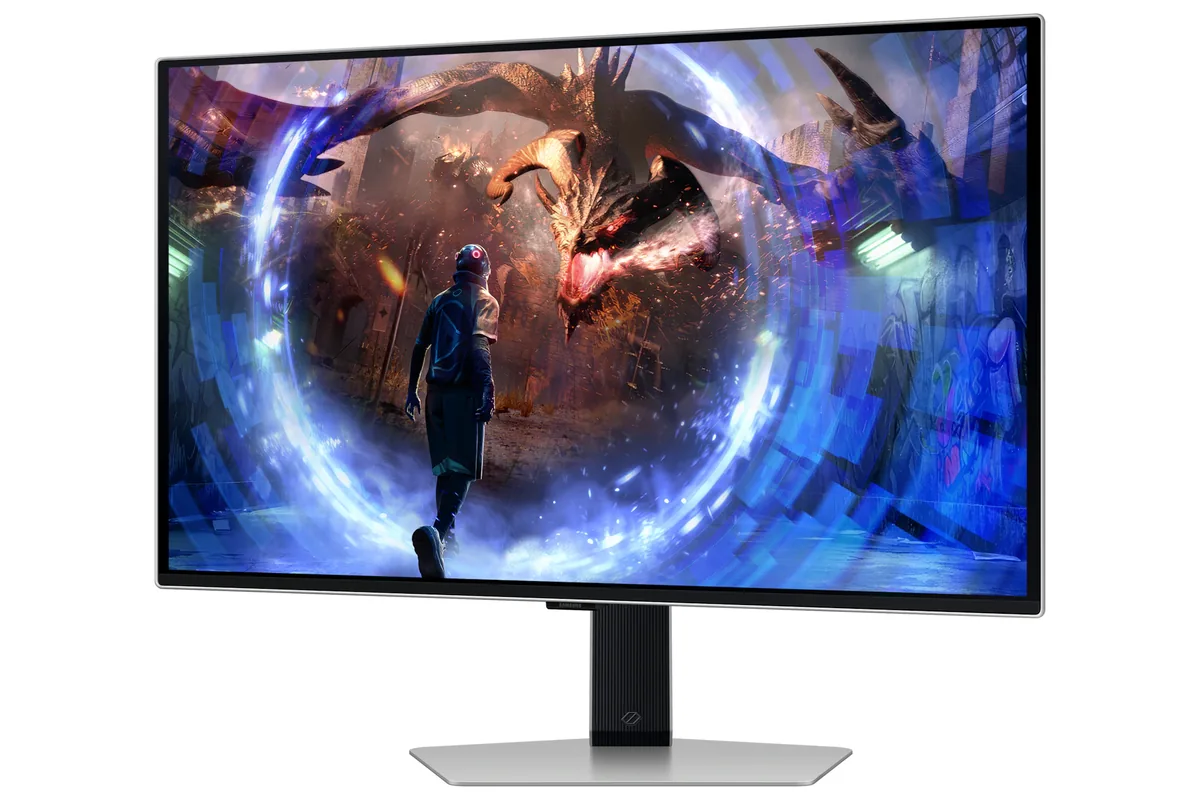
Samsung Odyssey OLED G6 G60SD
46ppd · sharpReal HDR~$900
Samsung's answer to LG's 27-inch OLED undercuts it on one number and matches it on the other: 360 Hz against LG's 240, and the same decision to put a matte treatment over the panel rather than leave it glossy.
Best for: A room with windows that would defeat a glossy OLED
- 2×HDMI 2.1· full speed(DSC)
- DisplayPort 1.4· full speed(DSC)
Samsung
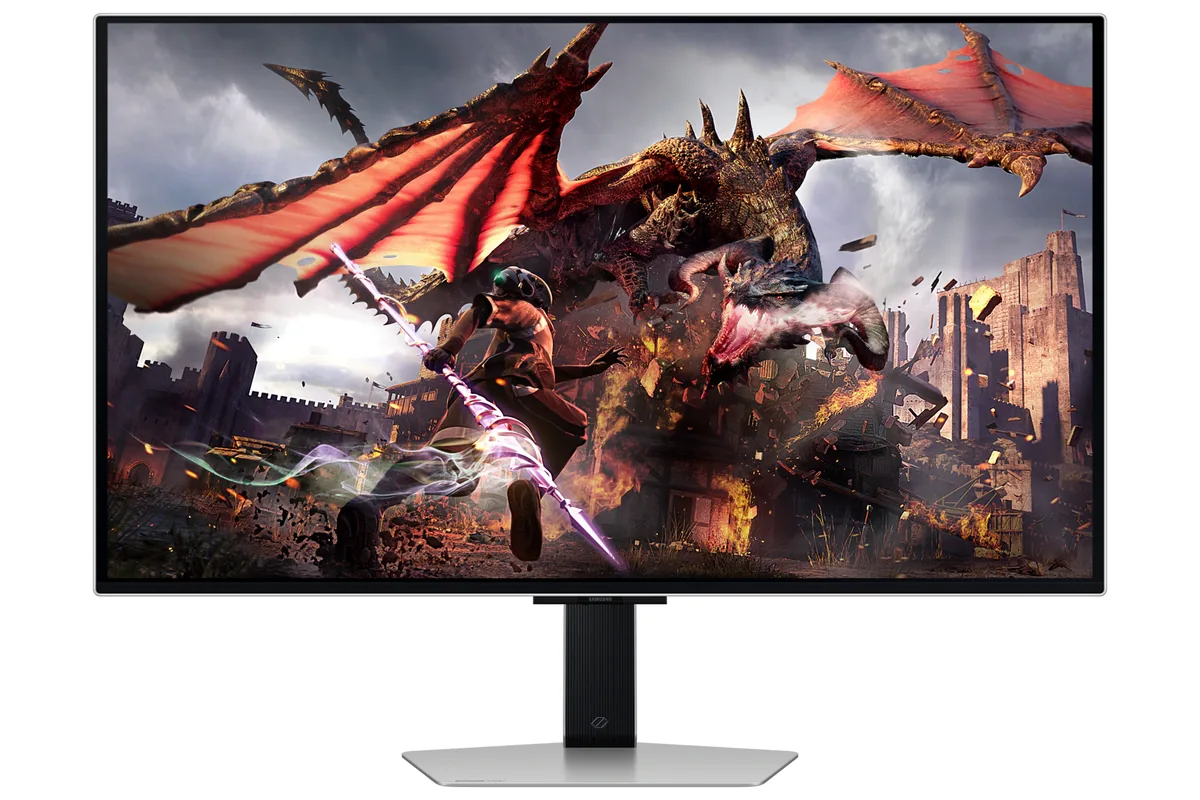
Samsung Odyssey OLED G8 G80SD
58ppd · sharpReal HDR~$1,300
Tizen, the smart-TV platform off Samsung's televisions, ships on this 32-inch 4K QD-OLED and cuts both ways: apps and streaming with no PC attached, and an interface that would rather be a television.
Best for: A 4K OLED desktop that also needs to work without a PC attached
- 2×HDMI 2.1· full speed(DSC)
- DisplayPort 1.4· full speed(DSC)
| Specification | Samsung Odyssey OLED G6 G60SD | Samsung Odyssey OLED G8 G80SD |
|---|---|---|
| Approx. price | ~$900 | ~$1,300 |
| Type | OLED gaming | OLED gaming |
| Screen size | 27 in | 32 in |
| Resolution | 2560×1440 | 3840×2160 |
| Aspect ratio | 16:9 | 16:9 |
| Pixels per degree | 46 — sharp | 58 — sharp |
| Pixels per inch | 109 | 138 |
| Panel | QD-OLED | QD-OLED |
| Finish | matte | matte |
| Curvature | Flat | Flat |
| Max refresh | 360 Hz | 240 Hz |
| Response time | 0.03 ms GtG | 0.03 ms GtG |
| VRR | FreeSync Premium Pro | G-Sync Compatible |
| HDR tier | Real HDR | Real HDR |
| HDR certification | None | None |
| Peak brightness | 1,000 nits claimed | 1,000 nits claimed |
| SDR brightness | 250 nits | 250 nits |
| Local dimming | Per-pixel (emissive) | Per-pixel (emissive) |
| Static contrast | effectively infinite | effectively infinite |
| Colour gamut | 99% DCI-P3 | 99% DCI-P3 |
| Colour depth | 10-bit | 10-bit |
| HDMI | 2 × HDMI 2.1 | 2 × HDMI 2.1 |
| DisplayPort | 1 × DisplayPort 1.4 | 1 × DisplayPort 1.4 |
| DSC | Supported | Supported |
| Port speed | 2 of 2 inputs at full speed | 2 of 2 inputs at full speed |
| USB-C | None | None |
| Thunderbolt | No | No |
| KVM | None | None |
| USB hub | 2 ports | 2 ports |
| Speakers | None | Built in |
| Stand | height, tilt, swivel, pivot | height, tilt, swivel, pivot |
| VESA | 100x100 | 100x100 |
| Burn-in cover | not published | 3 years |
| Weight | 15.2 lb | 18.5 lb |
| Released | 2024 | 2024 |
| $ per inch | $33 | $41 |
| $ per megapixel | $244 | $157 |
Samsung Odyssey OLED G6 G60SD: what it gives up
- The matte film lays a faint grain over large white areas, which shows in documents more than in games
- QD-OLED's triangular subpixel layout fringes coloured text more visibly than WOLED does
- No USB-C, so a laptop needs its own charger plus a DisplayPort or HDMI cable
- 250 nits full-field SDR is dim for daytime desk work
- Raised blacks under ambient light are QD-OLED's known weakness; a dark room hides it and a bright one does not
Samsung Odyssey OLED G8 G80SD: what it gives up
- TFTCentral measured 260 nits full-field in SDR — bright rooms will wash it out regardless of the 1,000-nit peak claim
- The smart platform inserts itself into the input switching and carries ads in the launcher
- QD-OLED still lifts black level once there is ambient light, and the matte film turns that into an even grey wash rather than hiding it
- No USB-C at all, so nothing docks here on a single cable
- No KVM, so switching sources does not move the keyboard and mouse
Full specifications: Samsung Odyssey OLED G6 G60SD · Samsung Odyssey OLED G8 G80SD