Samsung Odyssey OLED G9 G95SC vs Samsung Odyssey Neo G9 G95NC
The Samsung Odyssey Neo G9 G95NC is 14 pixels per degree sharper at a desk distance — 59 against 45, and both sit in the sharp band. Every other published specification for both is in the table, with the rows where they differ tinted.
Samsung
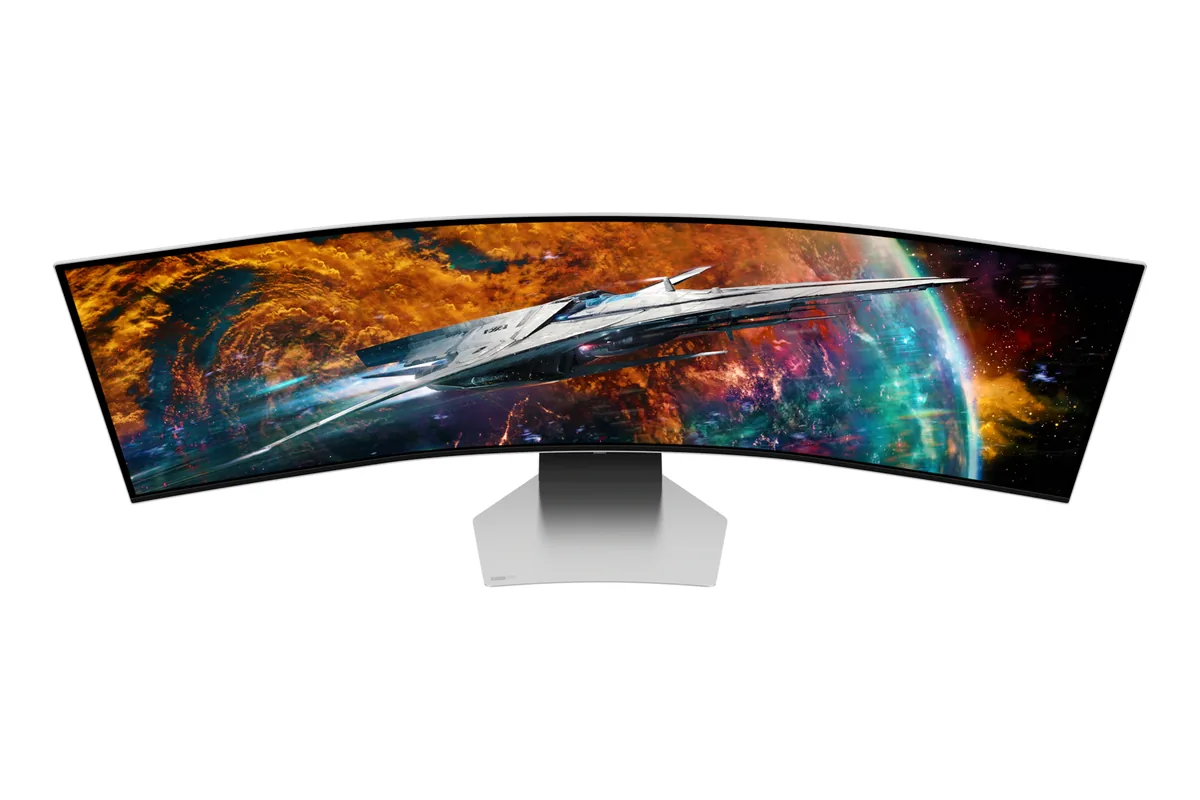
Samsung Odyssey OLED G9 G95SC
45ppd · sharpReal HDR~$1,100
Two 27-inch 1440p monitors fused into one 1800R curve, with an OLED panel behind them.
Best for: Replacing a dual-27-inch setup with one unbroken 240 Hz canvas
- 2×HDMI 2.1· full speed(DSC)
- DisplayPort 1.4· full speed(DSC)
Samsung
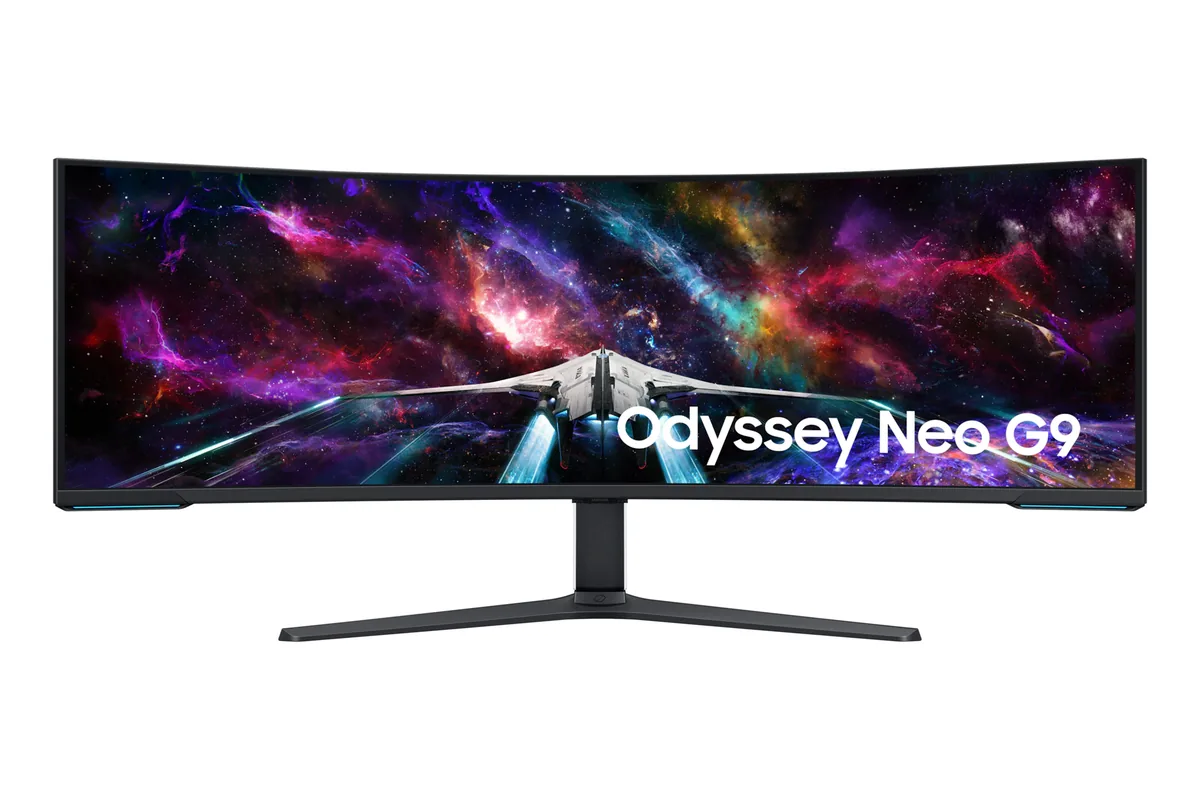
Samsung Odyssey Neo G9 G95NC
59ppd · sharpReal HDR~$2,100
Two 4K panels wide at 240 Hz is more data than HDMI 2.1 can carry even with compression, so the UHBR13.5 DisplayPort here is not a spec-sheet flourish — no other monitor in this catalog outruns HDMI 2.1 that way.
Best for: The widest single-panel desktop made, given a card with a DisplayPort 2.1 output
- 3×HDMI 2.1· full speed at 8-bit
- DisplayPort 2.1 UHBR13.5· full speed(DSC)
| Specification | Samsung Odyssey OLED G9 G95SC | Samsung Odyssey Neo G9 G95NC |
|---|---|---|
| Approx. price | ~$1,100 | ~$2,100 |
| Type | Ultrawide | Ultrawide |
| Screen size | 49 in | 57 in |
| Resolution | 5120×1440 | 7680×2160 |
| Aspect ratio | 32:9 | 32:9 |
| Pixels per degree | 45 — sharp | 59 — sharp |
| Pixels per inch | 109 | 140 |
| Panel | QD-OLED | Mini-LED VA |
| Finish | semi-glossy | matte |
| Curvature | 1800R | 1000R |
| Max refresh | 240 Hz | 240 Hz |
| Response time | 0.03 ms GtG | 1 ms GtG |
| VRR | G-Sync Compatible | FreeSync Premium Pro |
| HDR tier | Real HDR | Real HDR |
| HDR certification | DisplayHDR True Black 400 | DisplayHDR 1000 |
| Peak brightness | 400 nits claimed | 1,000 nits claimed |
| Measured peak | — | 1,300 nits · Display Ninja |
| SDR brightness | 250 nits | 420 nits |
| Local dimming | Per-pixel (emissive) | 2,392 zones |
| Static contrast | effectively infinite | 2,500:1 |
| Colour gamut | 99% DCI-P3 | 95% DCI-P3 |
| Colour depth | 10-bit | 8-bit+FRC |
| HDMI | 2 × HDMI 2.1 | 3 × HDMI 2.1 |
| DisplayPort | 1 × DisplayPort 1.4 | 1 × DisplayPort 2.1 UHBR13.5 |
| DSC | Supported | Supported |
| Port speed | 2 of 2 inputs at full speed | 1 of 2 inputs at full speed |
| USB-C | None | None |
| Thunderbolt | No | No |
| KVM | None | Built in |
| USB hub | 3 ports | 2 ports |
| Speakers | Built in | None |
| Stand | height, tilt | height, tilt, swivel |
| VESA | 100x100 | 100x100 |
| Burn-in cover | not published | — |
| Weight | 28.4 lb | 41.9 lb |
| Released | 2023 | 2023 |
| $ per inch | $22 | $37 |
| $ per megapixel | $149 | $127 |
Samsung Odyssey OLED G9 G95SC: what it gives up
- Very few games handle 32:9 properly; many letterbox it and some stretch the HUD
- 28 pounds and nearly four feet wide — check the desk before ordering
- 250 nits full-field SDR spread over a very large semi-glossy panel is dim in daylight
- No KVM and no USB-C video input, despite being the obvious monitor for two machines
- The 1800R curve is gentle enough that the far edges are still noticeably further away than the centre
Samsung Odyssey Neo G9 G95NC: what it gives up
- 42 pounds and 4.4 feet wide; many desks physically cannot take it
- Mini-LED blooming is visible around bright objects on dark backgrounds, which per-pixel OLED does not do
- VA response leaves dark-transition smearing that the 1 ms rating does not capture
- Driving 7680×2160 at 240 Hz needs a graphics card with a DisplayPort 2.1 output, which most installed cards are not
- No USB-C input at twenty-one hundred dollars, so a laptop still brings its own charger and cable
Full specifications: Samsung Odyssey OLED G9 G95SC · Samsung Odyssey Neo G9 G95NC