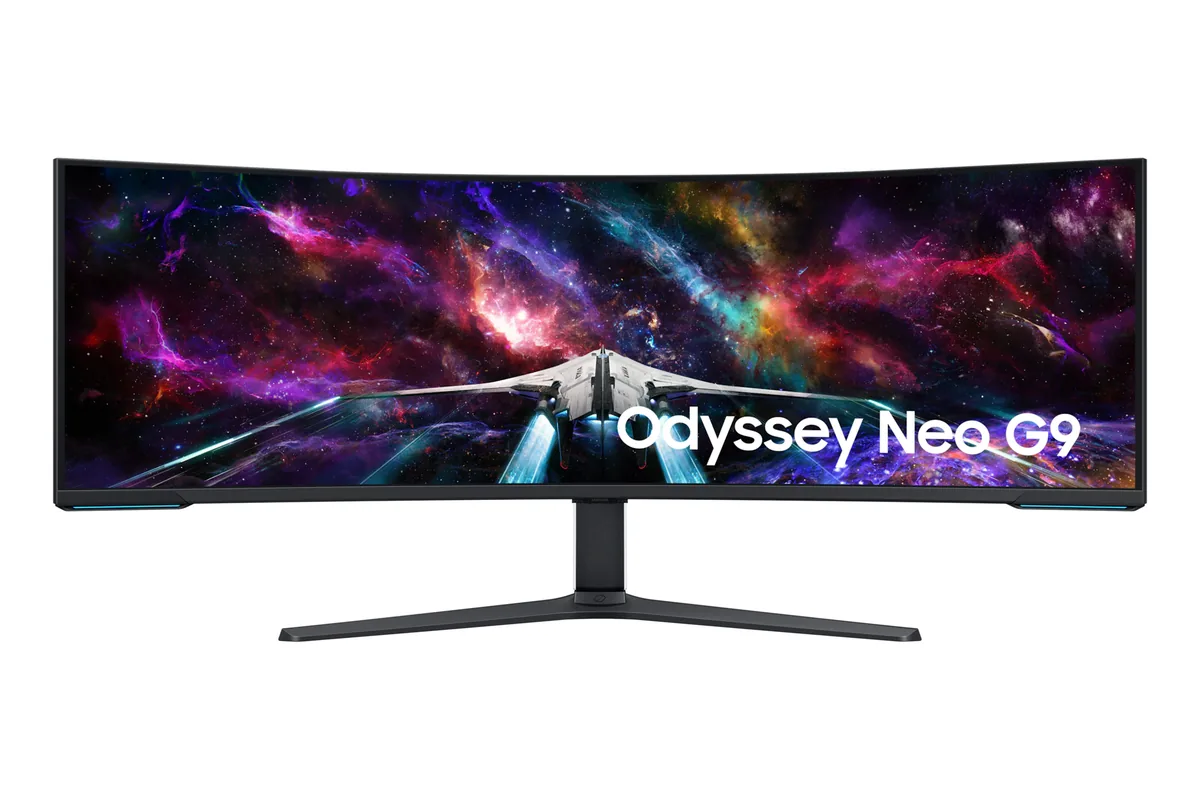
What it is like to own divides almost perfectly into logistics and luck. The logistics are real and solvable: 7680×2160 is a lot of pixels to feed, so 240Hz needs a DisplayPort 2.1 card, laptops mostly cannot reach native resolution at all, and the stand is large enough that a mounting plan becomes part of the purchase. Owners have worked all of it out in public — television wall mounts into studs, imported heavy-duty arms, cheap USB-C-to-DisplayPort cables that surprise people by working.
The luck is the part nobody can plan around. Ask whether anyone has owned one without a fault and the answers come back in both directions, and the specific worry that recurs is the power supply. Set against that, the owners who did get a good unit are among the most enthusiastic in any ultrawide discussion, and Samsung's firmware has demonstrably fixed at least the adaptive-sync flicker that plagued early units. Picture quality complaints, where they exist, are about the mini-LED backlight rather than the resolution: a faint structure over flat colour, and HDR video that arrives much too dark until you work through the settings.
The strongest case for it is a developer or analyst with a DisplayPort 2.1 desktop, a deep desk, and a wall to bolt it to — this is the only super ultrawide with real pixel density, and it genuinely replaces a monitor array. It is a poor fit if your main machine is a laptop, if you need one-cable USB-C docking, or if you would rather not own a nearly five-foot-wide display whose failure reports you will have read before it arrives.