Samsung ViewFinity S9 vs BenQ PD3225U
The Samsung ViewFinity S9 is 32 pixels per degree sharper at a desk distance — 91 against 59, and that is the line between sharp and retina-class. Every other published specification for both is in the table, with the rows where they differ tinted.
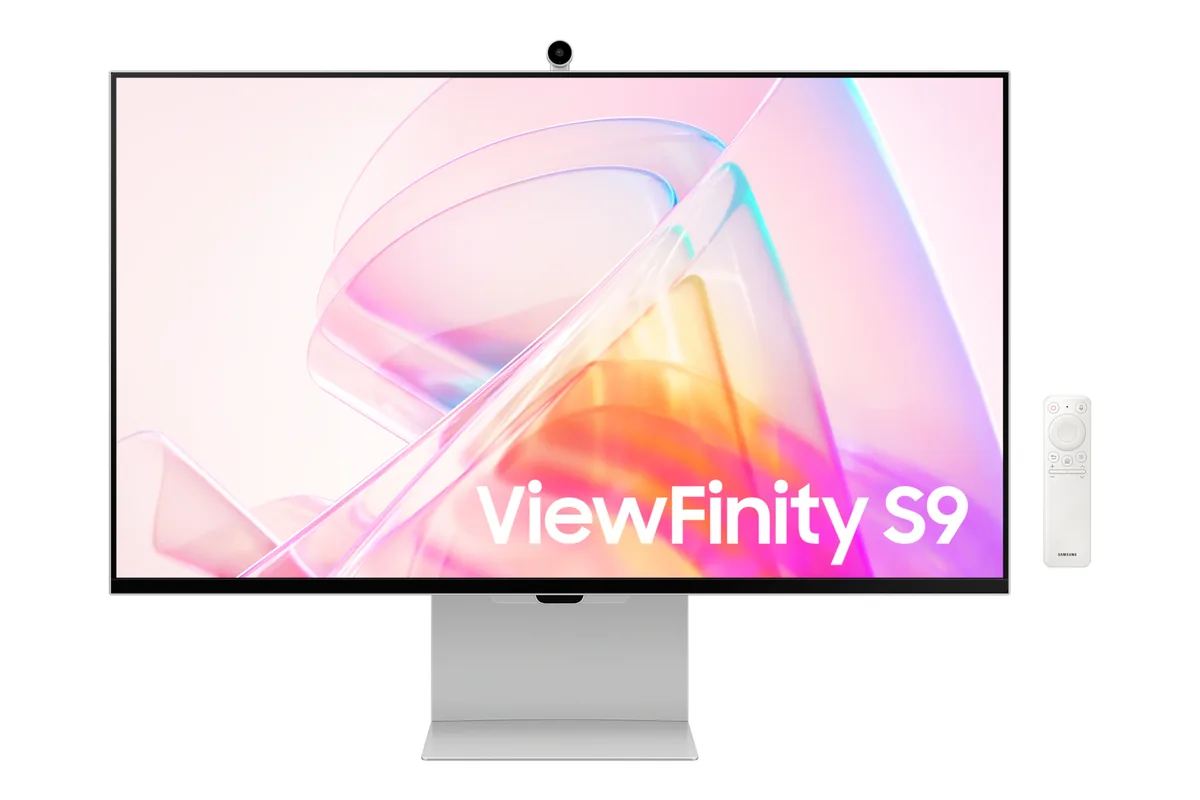
Samsung
Samsung ViewFinity S9
91ppd · retina-classNo HDR~$1,600
Built specifically to sit next to Apple's Studio Display and undercut it: the same 27-inch 5K panel density, a matte coating as standard rather than Apple's glossy glass, Thunderbolt 4 with 90 watts, and a detachable camera.
Best for: macOS at a true 2× scaling factor without a glass panel
- Thunderbolt (DP 1.4)· depends on DSC, which is not published
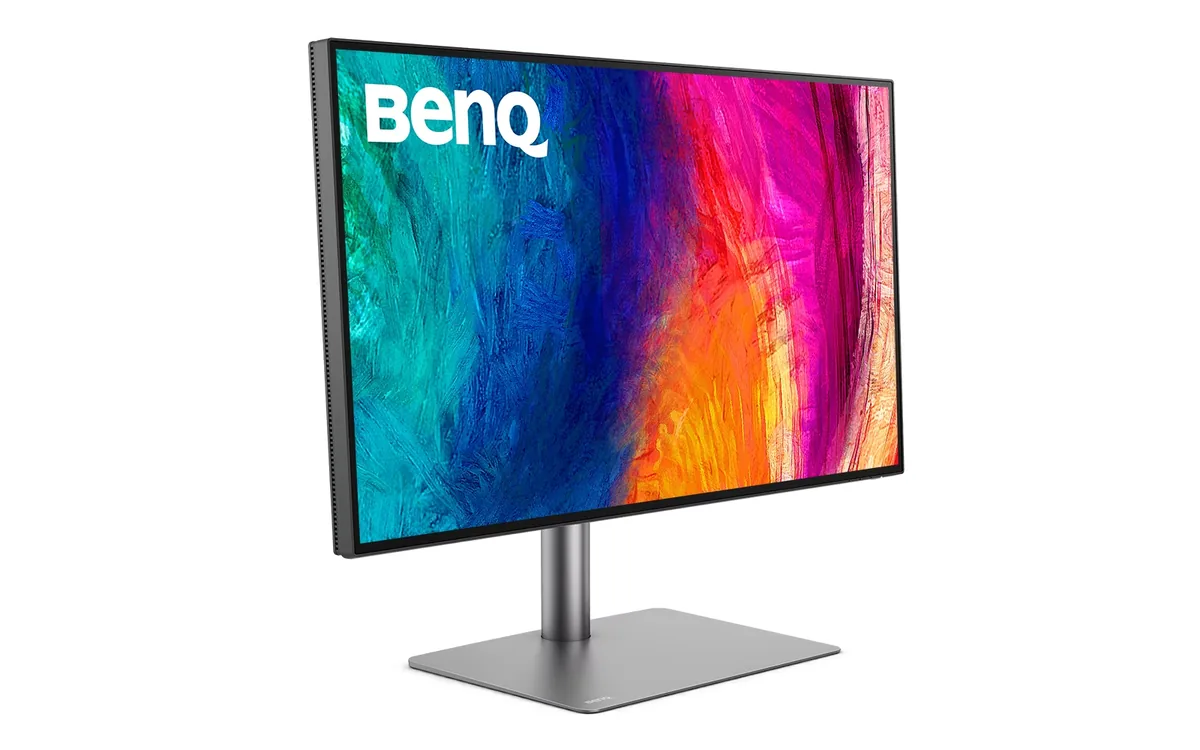
BenQ
BenQ PD3225U
59ppd · sharpAccepts an HDR signal~$1,100
The panel here is the IPS Black generation, which is where the 2000:1 native contrast comes from — roughly twice what a conventional IPS manages, and the single most visible difference between this and BenQ's cheaper 32-inch designer panels.
Best for: Mac-based photo and video work that needs deep blacks and a Thunderbolt dock in one box
- 2×HDMI 2.0· full speed at 8-bit
- DisplayPort 1.4· full speed
- Thunderbolt (DP 1.4)· full speed
| Specification | Samsung ViewFinity S9 | BenQ PD3225U |
|---|---|---|
| Approx. price | ~$1,600 | ~$1,100 |
| Type | 4K/5K creator | 4K/5K creator |
| Screen size | 27 in | 31.5 in |
| Resolution | 5120×2880 | 3840×2160 |
| Aspect ratio | 16:9 | 16:9 |
| Pixels per degree | 91 — retina-class | 59 — sharp |
| Pixels per inch | 218 | 140 |
| Panel | IPS | IPS |
| Finish | matte | matte |
| Curvature | Flat | Flat |
| Max refresh | 60 Hz | 60 Hz |
| Response time | 5 ms GtG | 5 ms GtG |
| VRR | None | None |
| HDR tier | No HDR | Accepts an HDR signal |
| HDR certification | None | DisplayHDR 400 |
| Peak brightness | 600 nits claimed | 400 nits claimed |
| SDR brightness | 600 nits | 400 nits |
| Static contrast | 1,000:1 | 2,000:1 |
| Colour gamut | 99% DCI-P3 | 98% DCI-P3 |
| Colour depth | 10-bit | 10-bit |
| HDMI | None | 2 × HDMI 2.0 |
| DisplayPort | 1 × DisplayPort, version not published | 1 × DisplayPort 1.4 |
| DSC | Not published | Not supported |
| Port speed | Unresolved: the maker publishes no DSC figure for these inputs | 2 of 3 inputs at full speed |
| USB-C | Video in over USB-C | Video in over USB-C |
| USB-C power | 90 W — 14-inch class laptop | 85 W — 14-inch class laptop |
| Thunderbolt | Yes | Yes |
| KVM | None | Built in |
| USB hub | 3 ports | 4 ports |
| Speakers | Built in | Built in |
| Stand | height, tilt, pivot | height, tilt, swivel, pivot |
| VESA | 100x100 | 100x100 |
| Weight | 16.3 lb | 20.2 lb |
| Released | 2023 | 2024 |
| $ per inch | $59 | $35 |
| $ per megapixel | $109 | $133 |
Samsung ViewFinity S9: what it gives up
- 60 Hz on a $1,600 monitor, at a time when 120 Hz productivity panels cost half that
- No HDMI, and the one DisplayPort is a mini-DP whose version Samsung does not publish — a desktop PC needs a USB-C output or an adapter
- Samsung claims HDR with no DisplayHDR tier and no dimming-zone count, so expect brighter highlights rather than deeper blacks
- The smart-TV platform on board is unnecessary on a creator display and gets in the way of input switching
BenQ PD3225U: what it gives up
- 60 Hz, and its HDMI ports are 2.0, so this is a work monitor that will feel stiff for anything else
- DisplayHDR 400 with an edge-lit backlight — HDR content will play, but not with any real highlight punch
- 85 W is short of what a maxed-out 16-inch laptop draws under sustained load
- At around eleven hundred dollars it costs roughly twice the 27-inch model for 4.5 more inches and better contrast
Full specifications: Samsung ViewFinity S9 · BenQ PD3225U