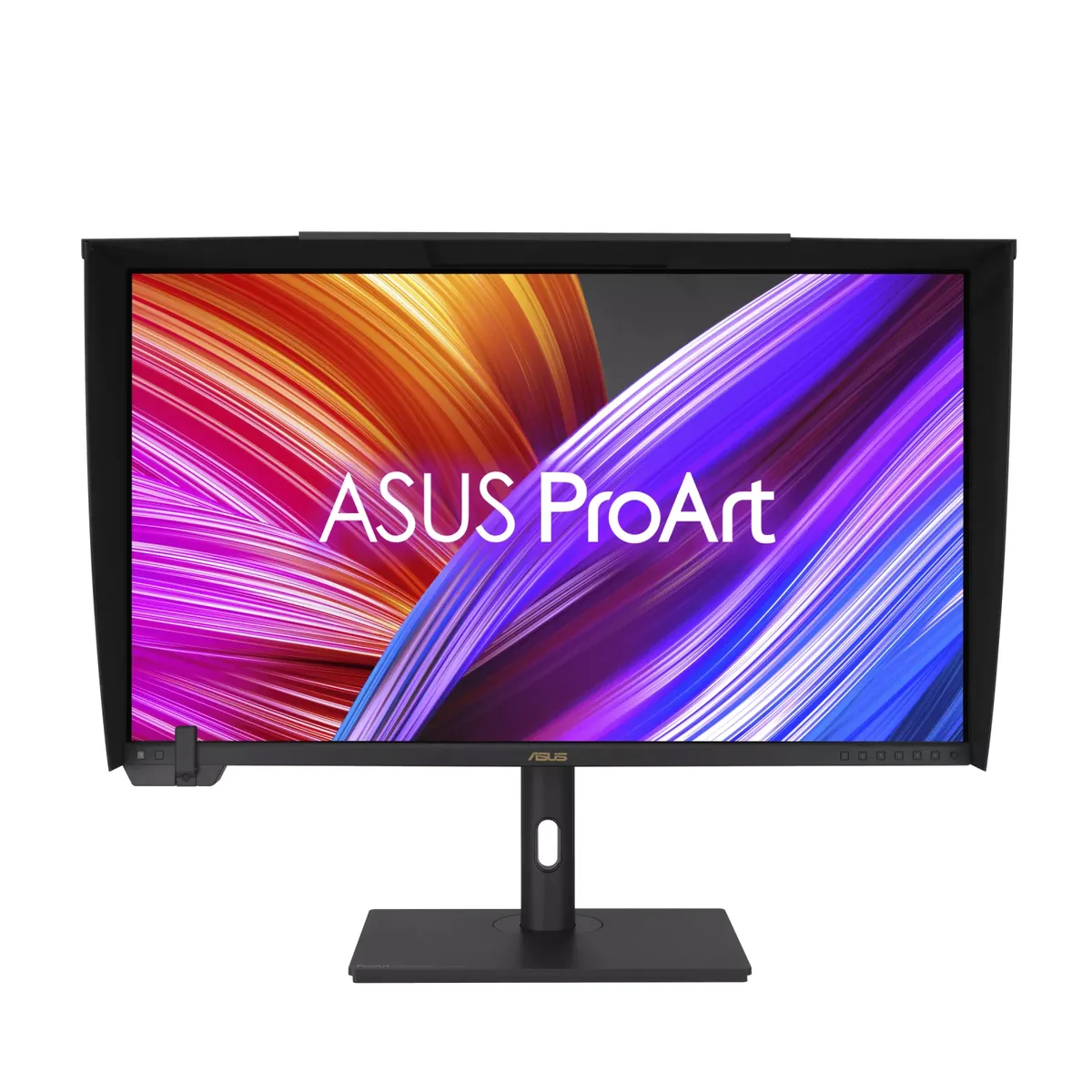
A reference-grade HDR mastering display: 2,304 mini-LED dimming zones behind a 32-inch 4K panel, 1,600 nits claimed peak, 1,000 nits sustained full-field, DisplayHDR 1400, and a colorimeter built into the bezel that recalibrates the panel on a schedule. Two other monitors in this catalog carry as many zones or more, but neither self-calibrates nor claims a Delta-E under one, which is the difference between a bright screen and a screen a grade can be trusted to. It runs at 60 Hz, and that is where the money did not go.
Approx. price
~$2,999
snapshot, not a live price
Sharpness?Pixels per degree of vision at desk distance. Under 40 the pixel grid is visible, 40–60 is sharp, over 60 passes the limit of 20/20 eyesight.
58ppd · sharp
text is clean; pixel edges show if you look for them
At 24 in. Try your distance
HDR tier?Whether the panel can really show HDR — per-pixel lighting (OLED) or 600+ nits behind dimming zones — or only accepts the signal.
Real HDR
1600 nits claimed behind 2,304 dimming zones
Peak brightness?The brightest the panel gets on a highlight, in nits. It matters for HDR more than for everyday use.
1,600nits claimed
DisplayHDR 1400
USB-C power?How much charging power the USB-C port sends back to a laptop. Up to 65 W holds a 13-inch ultrabook, up to 100 W a 14-inch machine; a 16-inch laptop wants about 140 W.
90 W
keeps a 14-inch machine charged under normal load
Max refresh?The most frames per second the panel can draw. Higher makes motion and scrolling smoother.
60 Hz
5 ms GtG rated
Port speed?Whether each input has the bandwidth to carry the panel's full resolution and refresh rate at once. — can each input carry this panel?
- 2×HDMI 2.0· full speed at 8-bit
- DisplayPort 1.4· full speed
- Thunderbolt (DP 1.4)· full speed
This panel needs 17.9 Gbps at 3840×2160, 60 Hz and 30 bits per pixel, and the maker does not say whether it supports DSC compression.
Best for: Grading HDR where the display itself has to be trusted