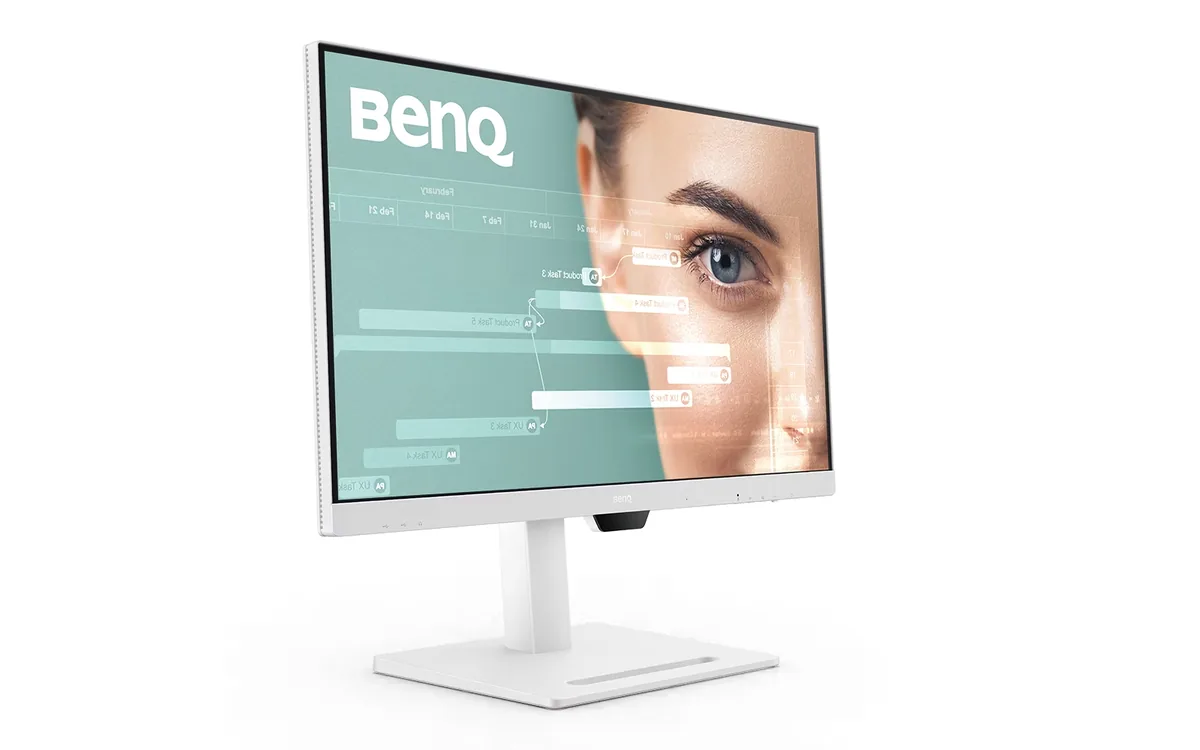
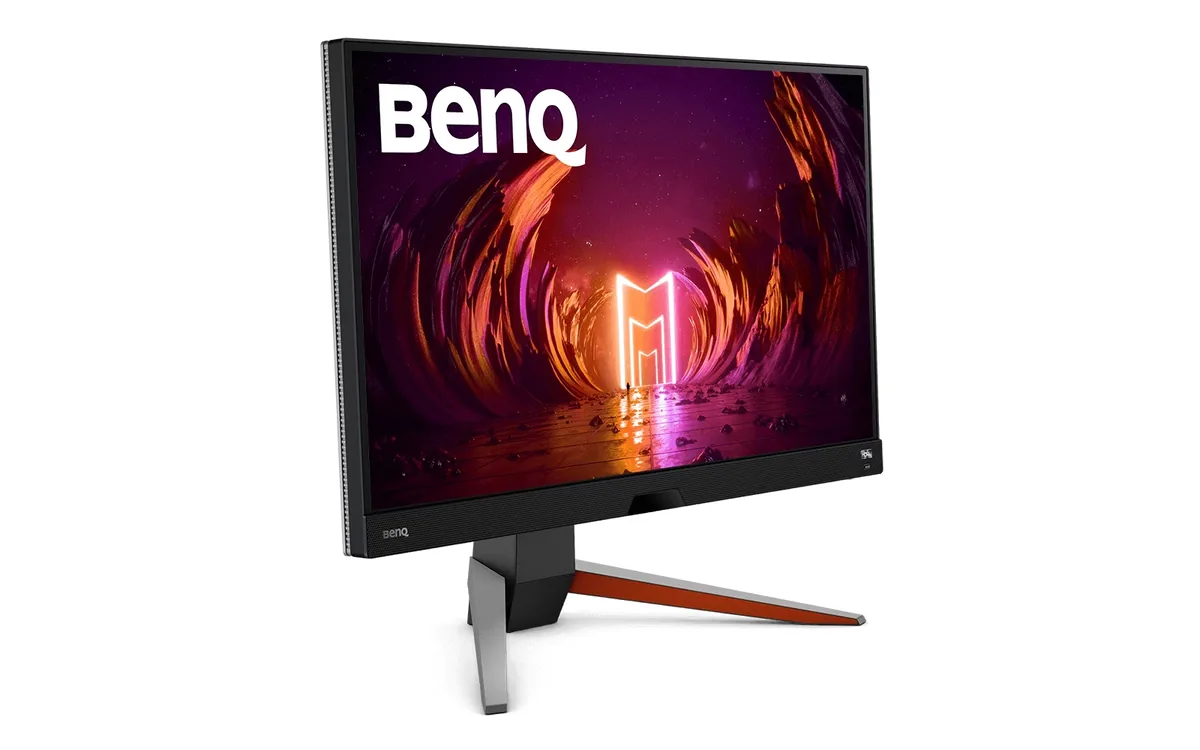
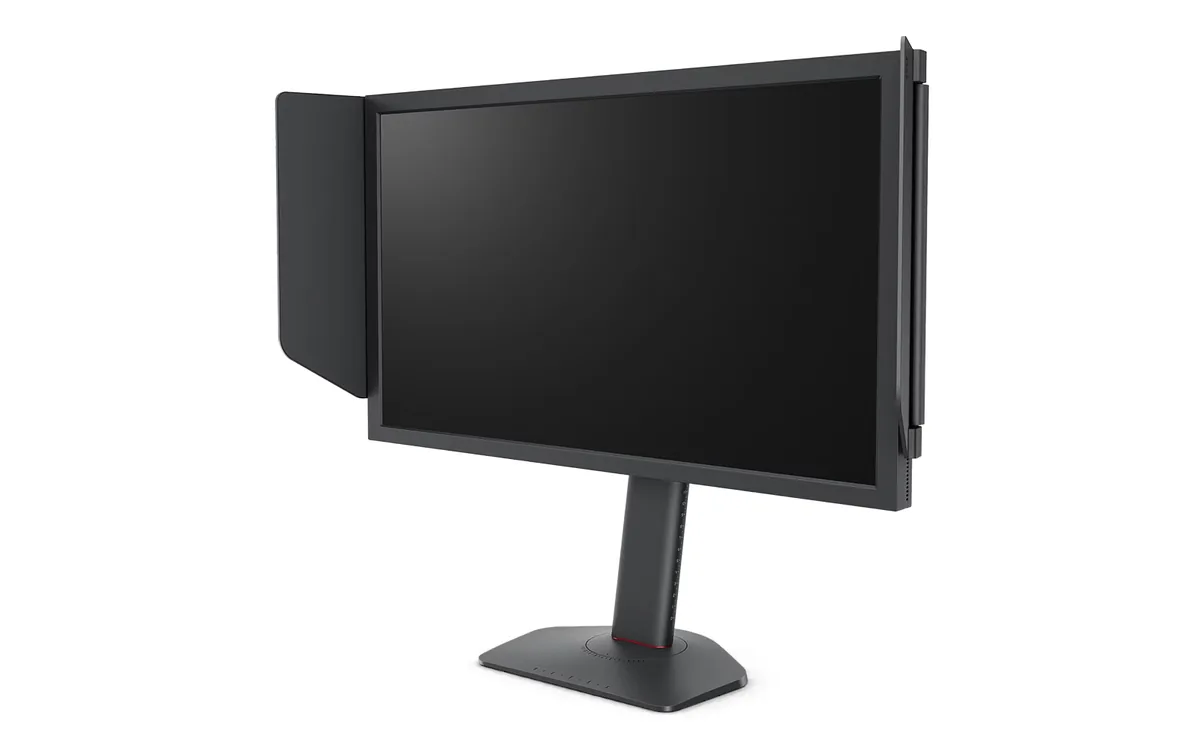
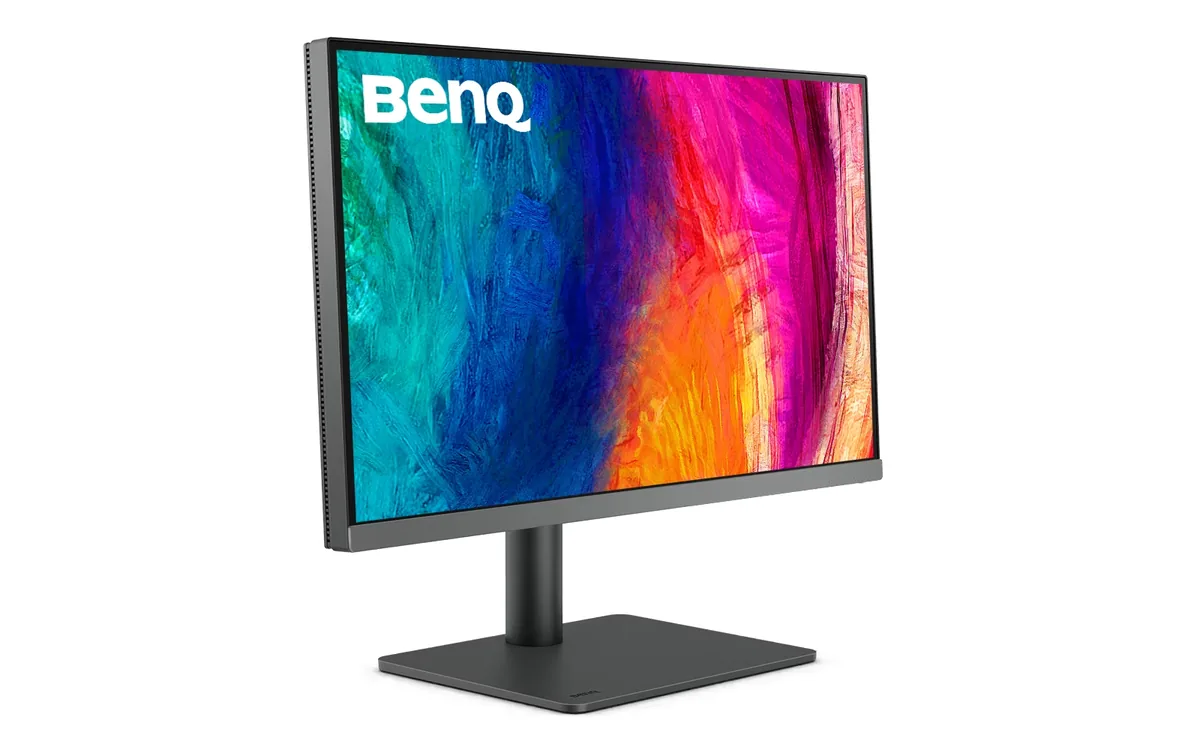
Two monitors in BenQ's range sit one letter apart, and choosing between them causes more confusion than any spec sheet should. The cheaper one runs faster and has better contrast. This one runs at 75 Hz with ordinary contrast, costs substantially more, and sells anyway — because it adds USB-C charging, a daisy-chain output, a noise-cancelling microphone, a stand that pivots to portrait, an ambient light sensor, and a white finish.
That sensor is the crux. Buyers pick this panel over an ASUS ProArt specifically to get automatic brightness, and knowingly give up refresh rate for it. When it behaves, it is the feature they wanted. One owner found his sensor plainly working — block it with a hand and the screen dims at once — while refusing to respond to the room's actual lighting, which no reset fixed. Worth knowing before you pay the premium for that one capability.
The buyer it fits is specific and common: somebody who codes, reads or runs calls for eight hours or more, wants a laptop docked with one cable, and values eye comfort over colour gamut and speed. Anyone doing colour-critical design work, or who would rather have 100 Hz and deeper blacks for less money, should look at the cheaper sibling or a ProArt instead.