Why Text Looks Fringed on an OLED Monitor

Short answer

Because subpixel antialiasing assumes the three colour dots in each pixel sit in a vertical RGB stripe, and OLED monitors do not use one: QD-OLED arranges them in a triangle, and WOLED adds a white subpixel. Windows renders the edges of small glyphs on the wrong-coloured dots, which shows as a faint red or green rim. A higher-resolution OLED hides it, macOS mostly sidesteps it, and no setting fixes it outright.

The stripe that everything assumes

An LCD pixel is three vertical bars: red, green, blue, left to right, always. Font renderers exploit this. ClearType on Windows and subpixel antialiasing generally treat one pixel as three independently addressable columns of light, so a vertical stem can be positioned to a third of a pixel by lighting the right column more than the others. That is why text on a 109-PPI LCD looks better than the pixel count should allow.

The trick depends entirely on the physical layout being a stripe. Change the layout and the renderer is now lighting the wrong dots, which the eye sees as colour where there should be none.

What the two OLED types actually do

QD-OLED, which Samsung Display makes and which appears in this catalog under Alienware, MSI, Asus and Samsung badges, uses a triangular arrangement: red and green side by side with blue below, in a triad rather than a row. Vertical stems get a green cast on one side and a magenta cast on the other. It is most visible on thin dark text against a white background, which is to say in a document or an IDE.

WOLED, which LG Display makes, keeps a stripe but adds a fourth white subpixel to raise brightness. The renderer's assumption about which column is which is now off by a quarter of a pixel, and the fringing is milder than QD-OLED's but still there. Both panel types also have a slightly different pixel structure at the edges of the glyph than the anti-aliasing expects, which reads as a thinner-looking font.

PanelSubpixel layoutText effect
LCD (IPS, VA, TN)RGB vertical stripewhat ClearType was designed for
WOLEDRGB stripe plus a white subpixelmild fringing, slightly thin strokes
QD-OLEDTriangular RGB triadgreen and magenta rims on vertical stems

What genuinely helps

Resolution. The fringe is a fixed fraction of a pixel wide, so it shrinks as pixels do: a 32-inch 4K OLED at 58 to 59 pixels per degree shows much less of it than a 27-inch 1440p OLED at 46, and this is the single biggest reason the 4K OLED panels are the ones people keep for work. Every 4K OLED in this catalog lands at 58 pixels per degree or better and every 1440p one lands at 46, which is a bigger difference to the eye than the two resolutions sound.

Turning subpixel antialiasing off is the other real fix, because grayscale antialiasing makes no assumption about layout. On macOS this is already the default — Apple dropped subpixel rendering in Mojave — which is why the same OLED panel is routinely described as fine on a Mac and poor on a PC. On Windows the ClearType tuner can reduce the effect but cannot remove it.

What does not help: brightness, contrast, colour calibration, a different cable, or the monitor's own sharpness control, which on most panels is an edge-enhancement filter that makes the fringe more obvious rather than less.
Monitors this comes up with

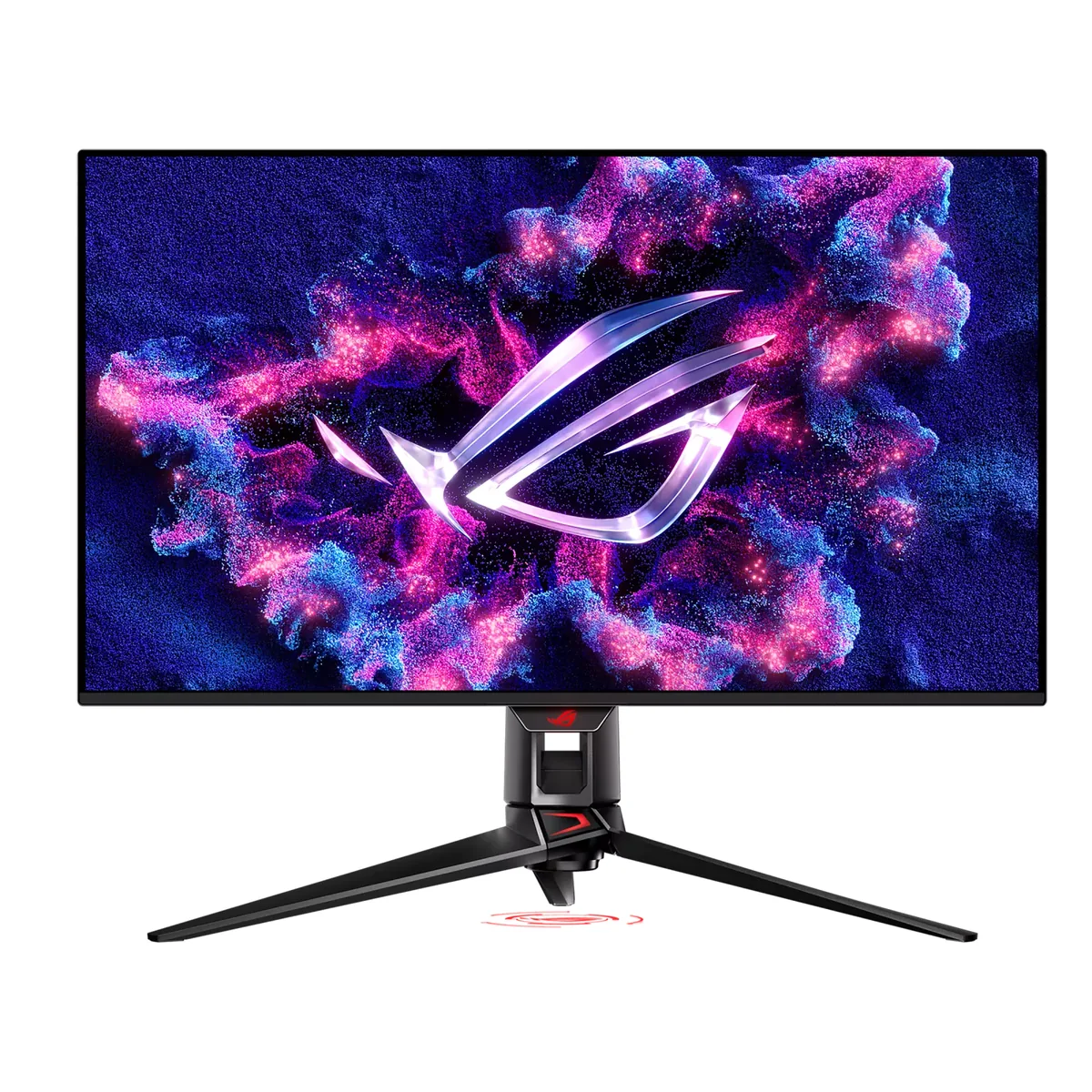
ASUS ROG Swift OLED PG32UCDM monitor
ASUS~$1,199

ASUS ROG Swift OLED PG32UCDM

31.5″ · 3840×2160 · 240 Hz · QD-OLED

Sharpness
59ppd · sharp
HDR
Real HDR
  • 4K 240 Hz QD-OLED
  • 1,065 nits measured
  • 90 W USB-C + KVM
  • Console at full speed

Best for: A flagship OLED that is also the dock and the KVM for a work laptop

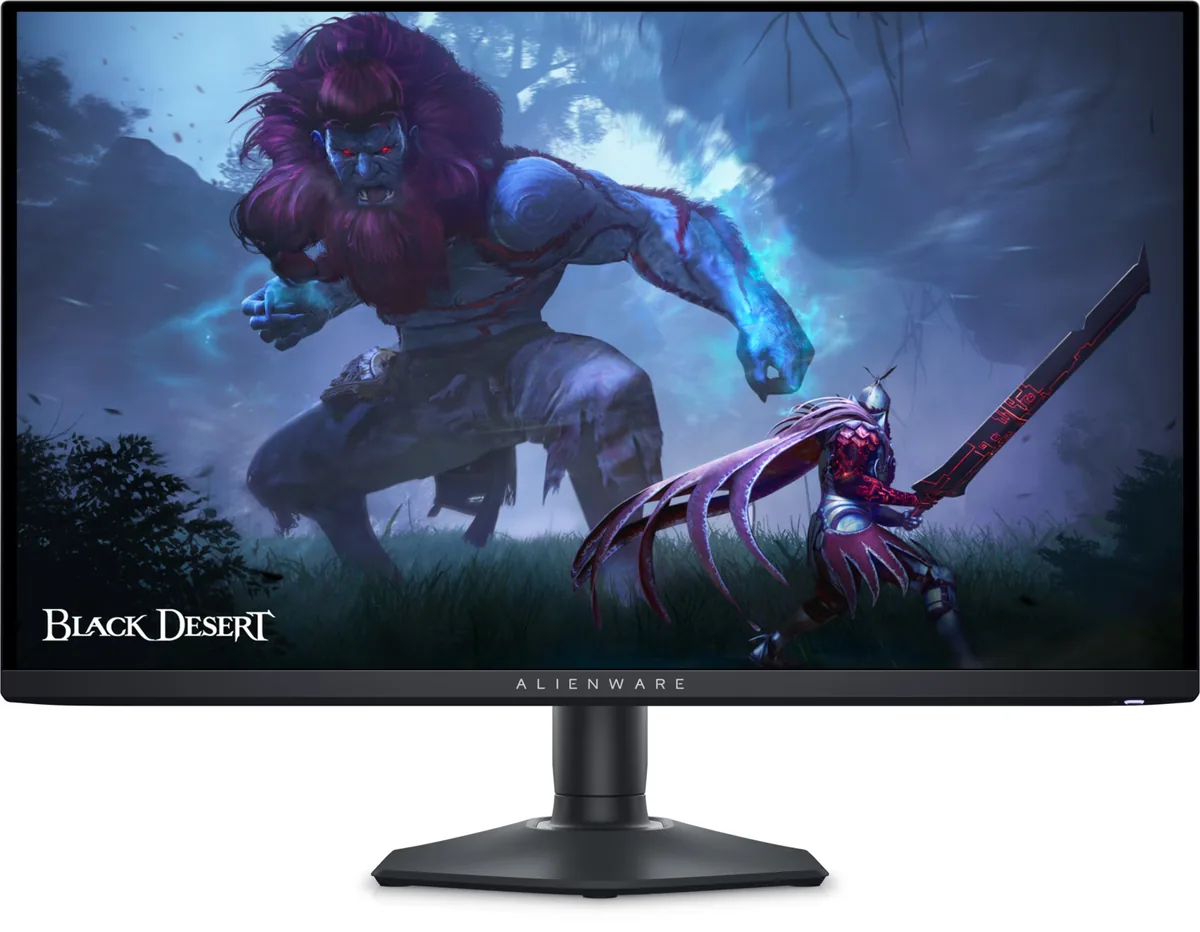
Alienware AW2725DF monitor
Alienware~$650

Alienware AW2725DF

26.7″ · 2560×1440 · 360 Hz · QD-OLED

Sharpness
46ppd · sharp
HDR
Real HDR
USB-C power
No USB-C power
  • 360 Hz QD-OLED
  • Around $650
  • 3-year burn-in cover

Best for: Competitive play on an OLED without flagship pricing

Acer Predator X32 X3 monitor
Acer~$880

Acer Predator X32 X3

31.5″ · 3840×2160 · 240 Hz · WOLED

Sharpness
59ppd · sharp
HDR
Real HDR
  • 4K 240 Hz / 1080p 480 Hz
  • Per-pixel contrast
  • 90 W USB-C
  • Console at full speed

Best for: One desk that has to serve 4K single-player games and competitive shooters

Related

  • How Worried Should You Be About OLED Burn-In?

    Worried enough to check the warranty before buying, and not so worried that you avoid the panel. Every OLED monitor in this catalog carries at least two years of cover that explicitly names burn-in, and most carry three. The exposure that matters is hours of static bright interface at high brightness — a taskbar, a spreadsheet grid, a stream overlay — not gaming.

  • Is 4K Worth It at 27 Inches, or Is 1440p Enough?

    Yes at 27 inches, and it is not close: 4K there works out to 68 pixels per degree of vision at a normal desk distance, against 46 for 1440p. Sixty is the point where 20/20 eyesight stops resolving individual pixels, so one of those panels has a visible grid and the other does not. The catch is that 4K at high refresh rates costs far more GPU than 1440p does, which is a separate decision from whether you can see it.

  • How to read a monitor spec sheet

    Every specification explained, with the real numbers from the catalog behind each one.